
Laser Toning in Korea: Cost, Results, and Treatment Frequency

Laser toning is one of the most familiar treatments in Korean clinics. It is gentle, has no downtime and is used to brighten skin and manage pigmentation such as melasma. Here is what to know.
1. What is laser toning?
Laser toning uses a low-energy Nd:YAG laser passed evenly across the face. It gradually breaks down excess melanin and evens skin tone without damaging the surface. Because it is gentle, it is suitable for many skin types.
2. What can it improve?
Melasma and diffuse pigmentation.
Dullness and uneven tone.
Mild post-acne pigmentation.
Overall brightness and clarity.
3. Results
Laser toning works gradually. Many patients notice brighter, more even skin after a few sessions, with continued improvement over a course. For melasma, improvement is typically visible over two to six months.
4. Treatment frequency
Laser toning is usually done every one to two weeks during an active course. For melasma, six to ten sessions are common. Maintenance sessions can be scheduled periodically afterwards.
5. Downtime
There is no real downtime. Some people notice mild redness for a short time after treatment. You can usually wear make-up immediately or the same day.
6. Cost in Korea
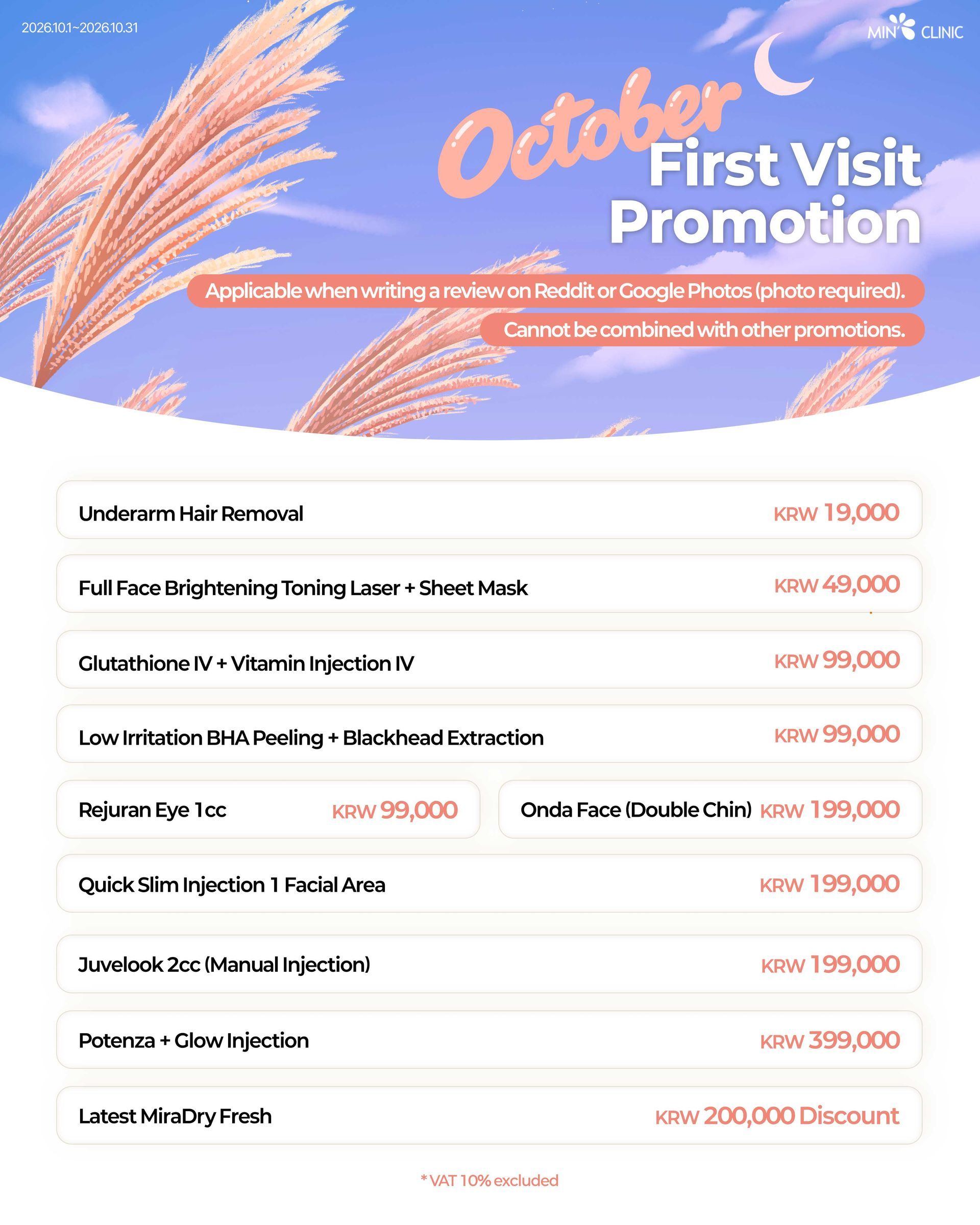
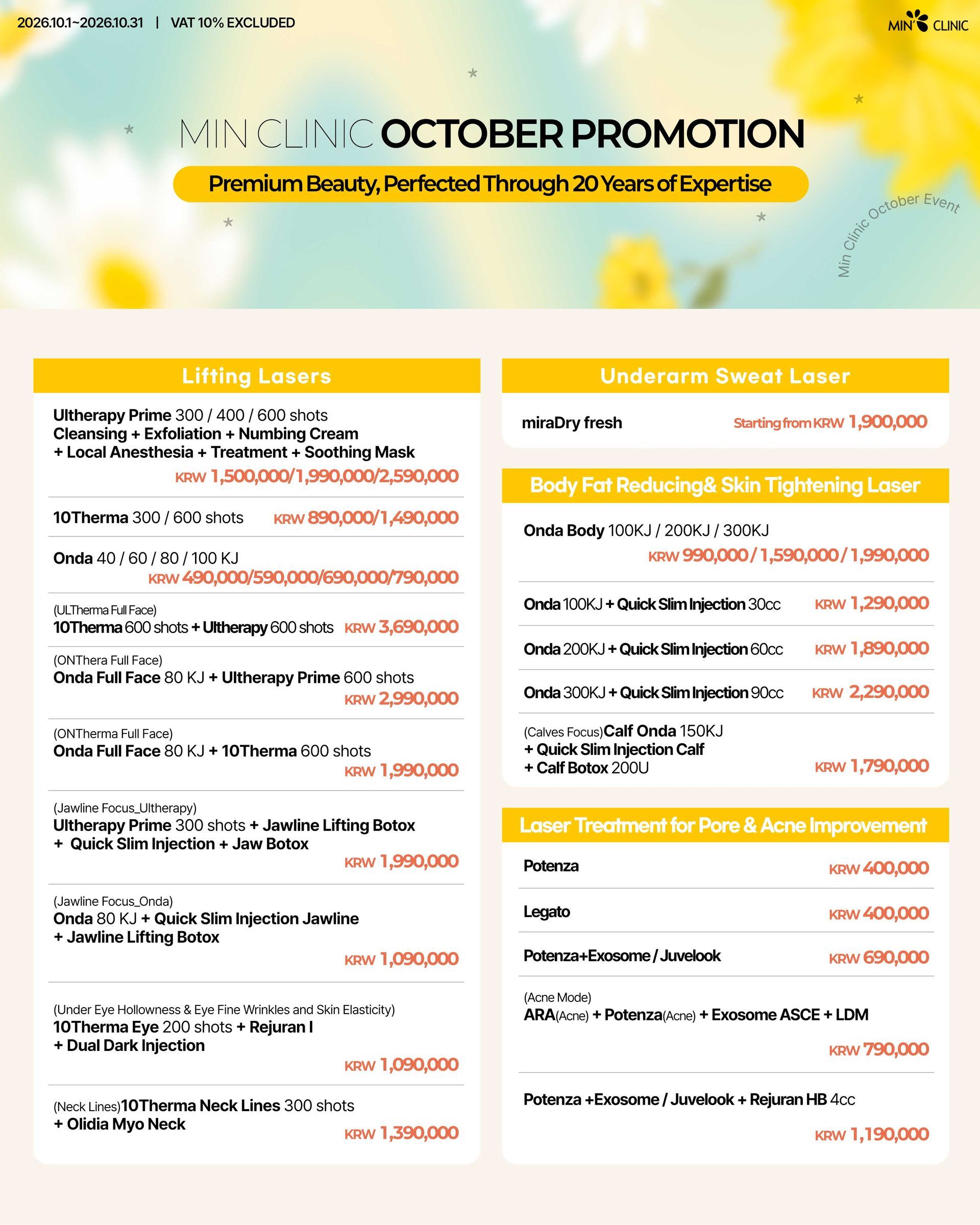
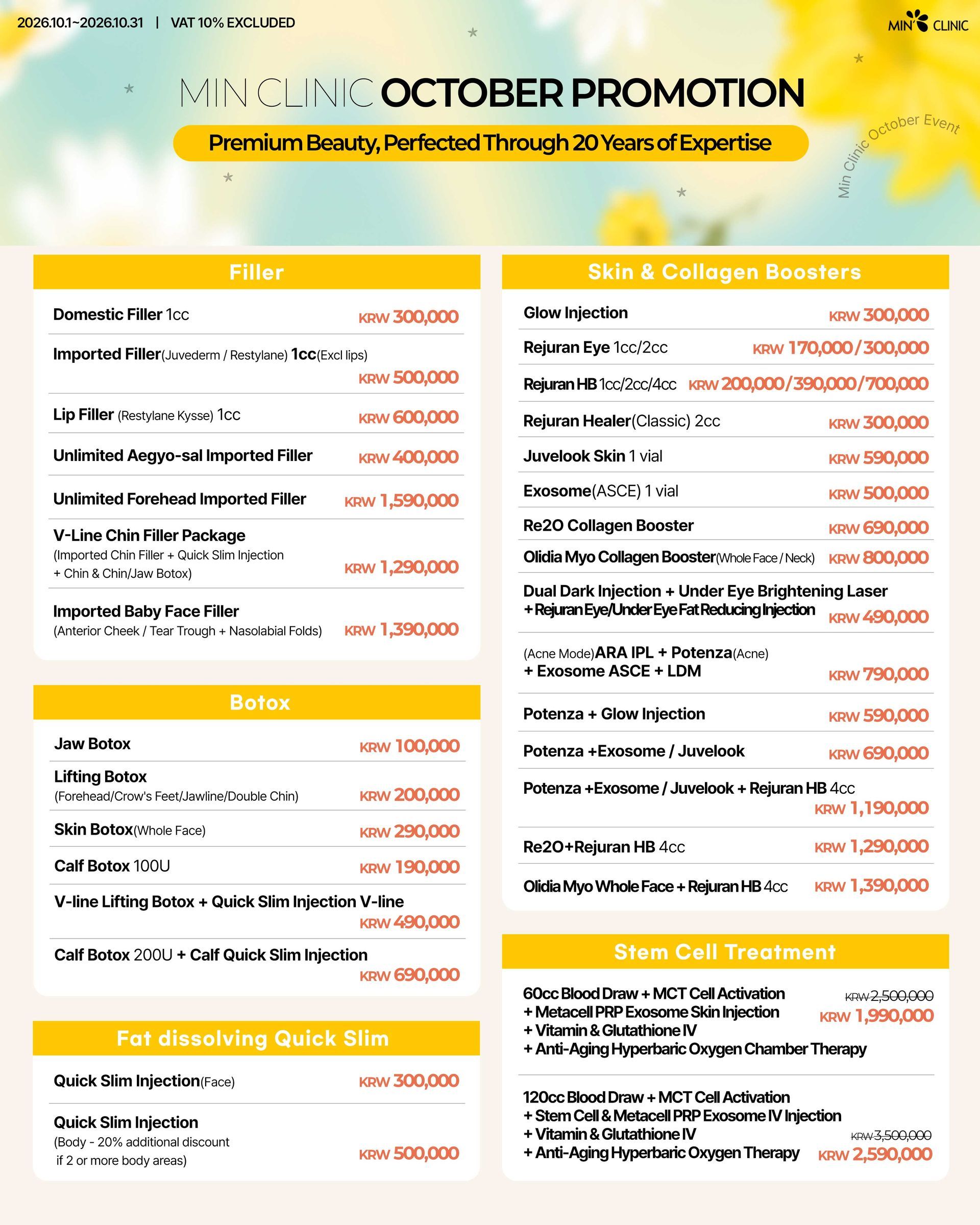
At MIN Clinic, melasma and toning sessions typically cost around KRW 150,000 to KRW 350,000 per session. Course packages may offer better value. See our event price list.
7. Planning as a visitor
Because laser toning works best as a series, visitors staying for several weeks can complete more sessions. Shorter visits can begin treatment in Seoul and continue at home.
8. Combining laser toning
Laser toning combines well with pico laser for spots, tranexamic acid for melasma and skin boosters for skin health.
Conclusion
Laser toning is a gentle, no-downtime way to brighten skin and manage melasma, typically requiring six to ten sessions. Message our English-speaking team on WhatsApp to plan a course, or read more on our laser toning page.
This article is for general information and does not replace medical advice. Results vary by individual, and a doctor's consultation is required before any treatment.