
ONDA vs Ultherapy: Which Is Better for Facial Contouring?
ONDA and Ultherapy are two of the most requested lifting treatments in Gangnam, and they are often compared as if they do the same job. In reality, they work on different layers of the face and solve different problems. Understanding that difference is the fastest way to choose the right treatment for facial contouring — or to see why many patients combine them.
This guide compares how each works, which concerns each treats best, results, comfort, downtime and cost, and explains when a combined plan makes the most sense.
1. How Ultherapy works
Ultherapy uses micro-focused ultrasound with real-time imaging. Energy is delivered as tiny heat points at precise depths, including the SMAS layer that a surgical facelift tightens. This triggers new collagen and elastin, so the tissue lifts and firms gradually over two to three months. Ultherapy is a structural treatment: it lifts tissue that has started to descend.
2. How ONDA works
ONDA uses Coolwaves — focused microwave energy that passes through the skin and heats the fat layer underneath. Fat cells are gradually reduced and the connective tissue tightens, while a cooling system protects the skin surface. ONDA is a contouring treatment: it reduces fullness that makes the face look heavy or round.
3. The key question: laxity or volume?
Before choosing, it helps to ask what is actually causing the change you see in the mirror.
If the skin and deeper tissues have loosened and moved down, causing early jowls, a softer jawline or a drooping brow, the main issue is laxity. Ultherapy is usually the stronger choice.
If the lower face looks full, round or heavy, with padding along the jaw or under the chin, the main issue is volume. ONDA is usually the better first step.
Many faces have both, especially from the late 30s onwards, which is why combination plans are so common.
4. Which is better for contouring?
For contouring in the sense of a slimmer, more sculpted outline, ONDA is often the more direct tool because it reduces the fat that blurs the jawline and chin. For contouring in the sense of a lifted, tighter outline, Ultherapy is more effective because it tightens the supportive layers. The best contour usually comes from addressing both volume and support.
5. Results compared
Ultherapy: gradual lift of the brow, cheeks, jawline and neck, peaking at two to three months and lasting about a year, or around 12 to 18 months with Ulthera Prime.
ONDA: gradual slimming and definition of treated areas over several weeks, with some patients choosing a short course for the best contour. Results can be long-lasting if weight stays stable.
6. Comfort and downtime
Both treatments are non-invasive and allow you to return to normal activities the same day. Ultherapy produces deep warmth and brief prickling, strongest over bone, so numbing cream is applied. ONDA feels like building warmth balanced by a cooling handpiece. Mild redness, tenderness or slight swelling can follow either treatment for a short time, and you can usually fly the next day.
7. Price in Seoul
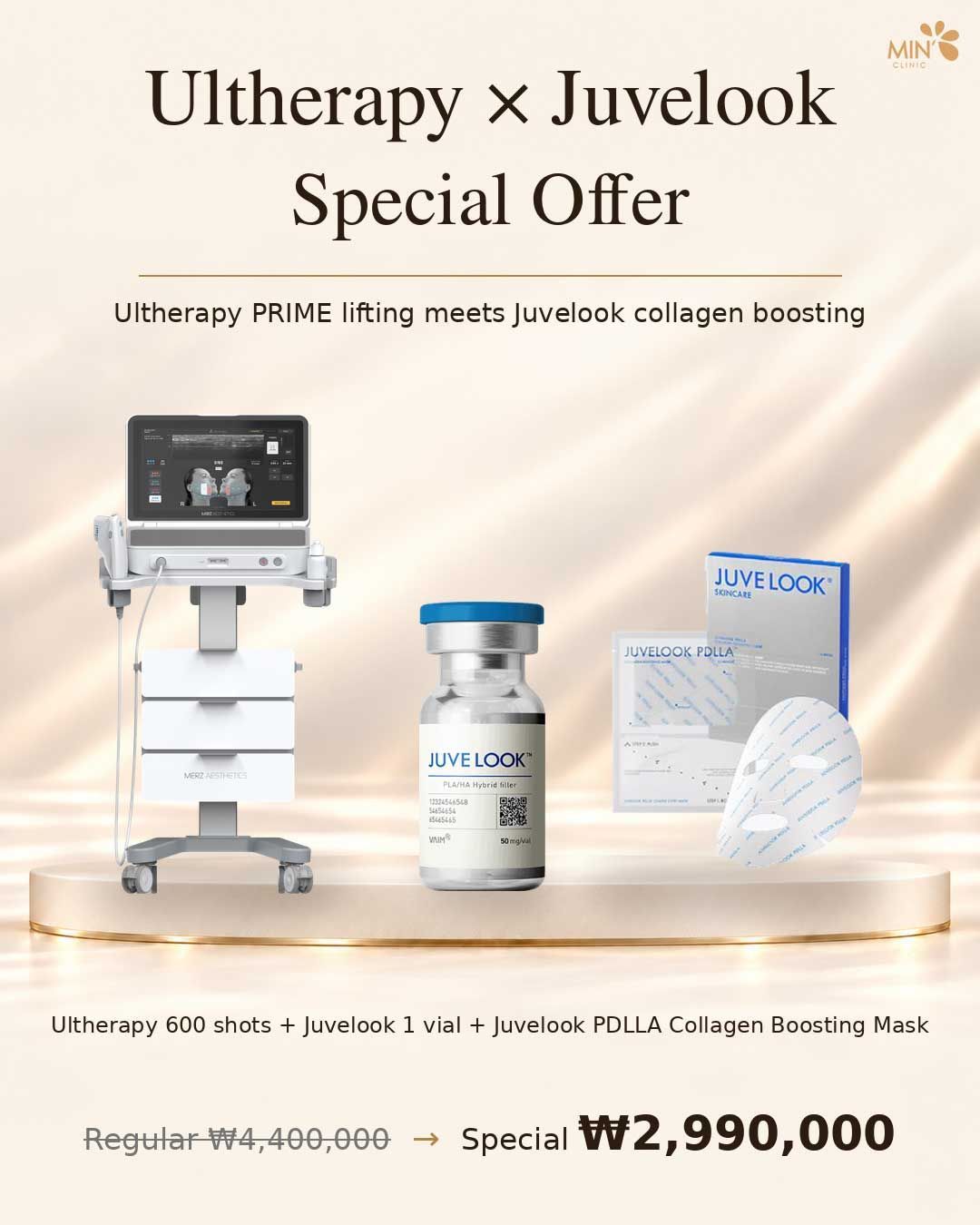
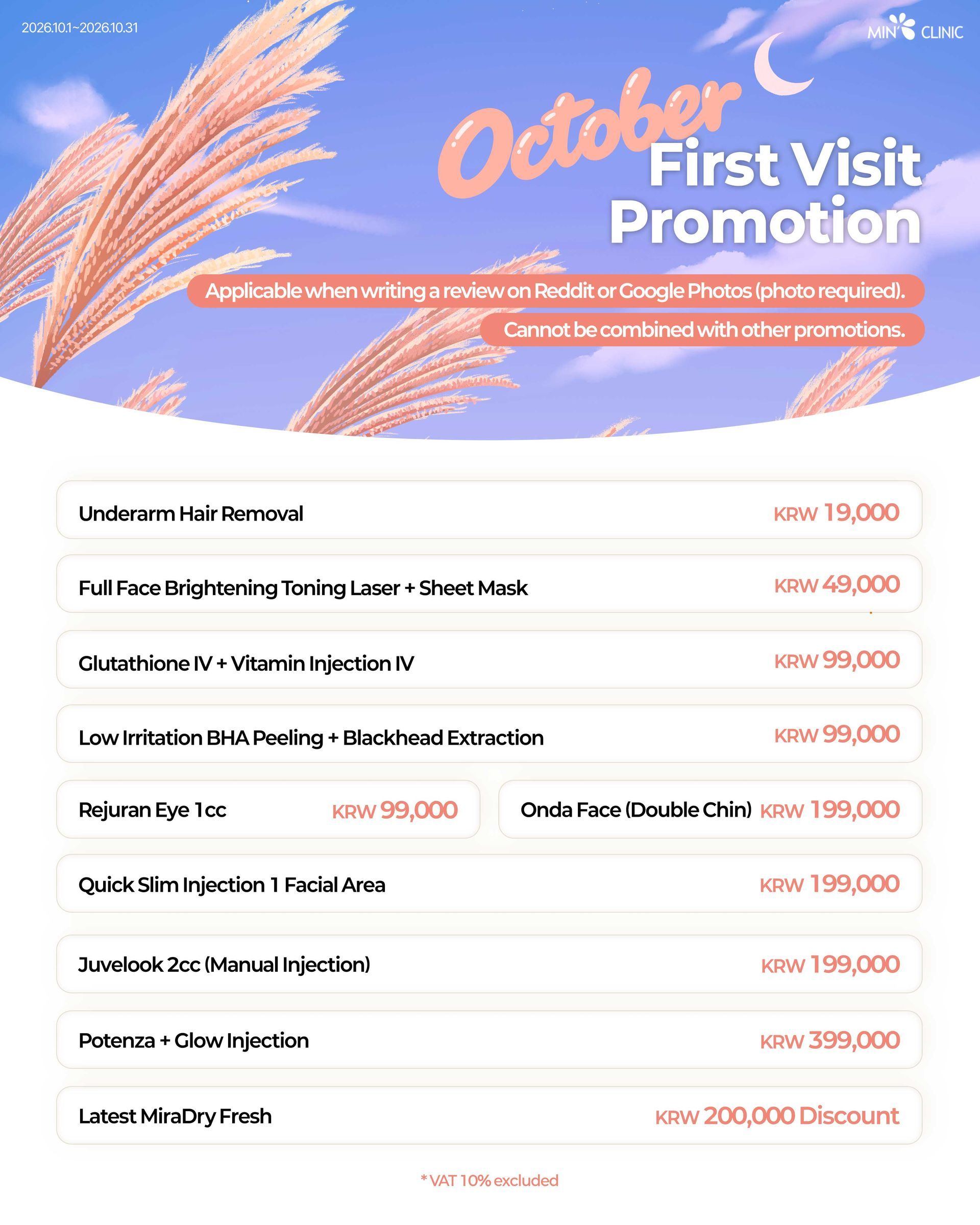
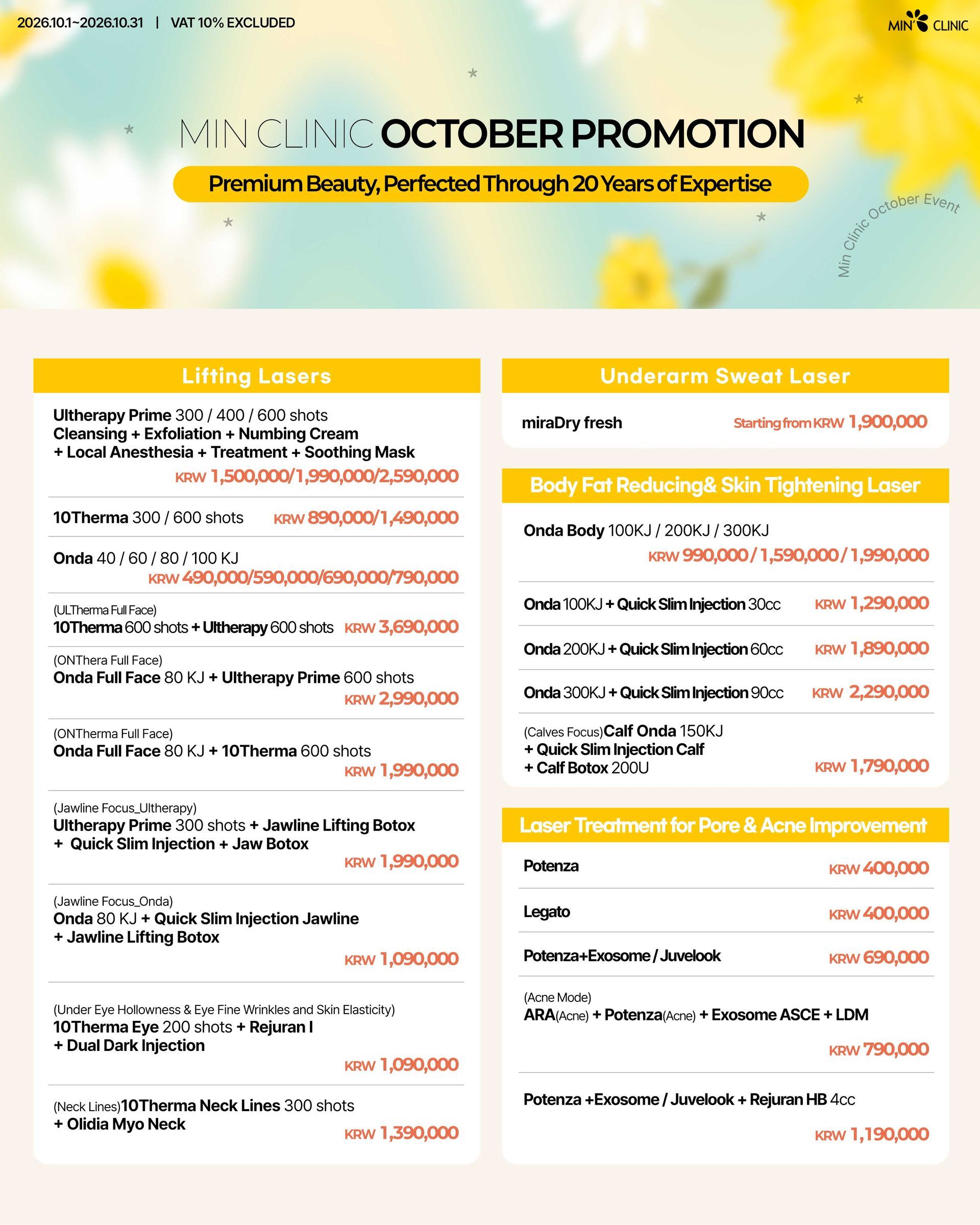
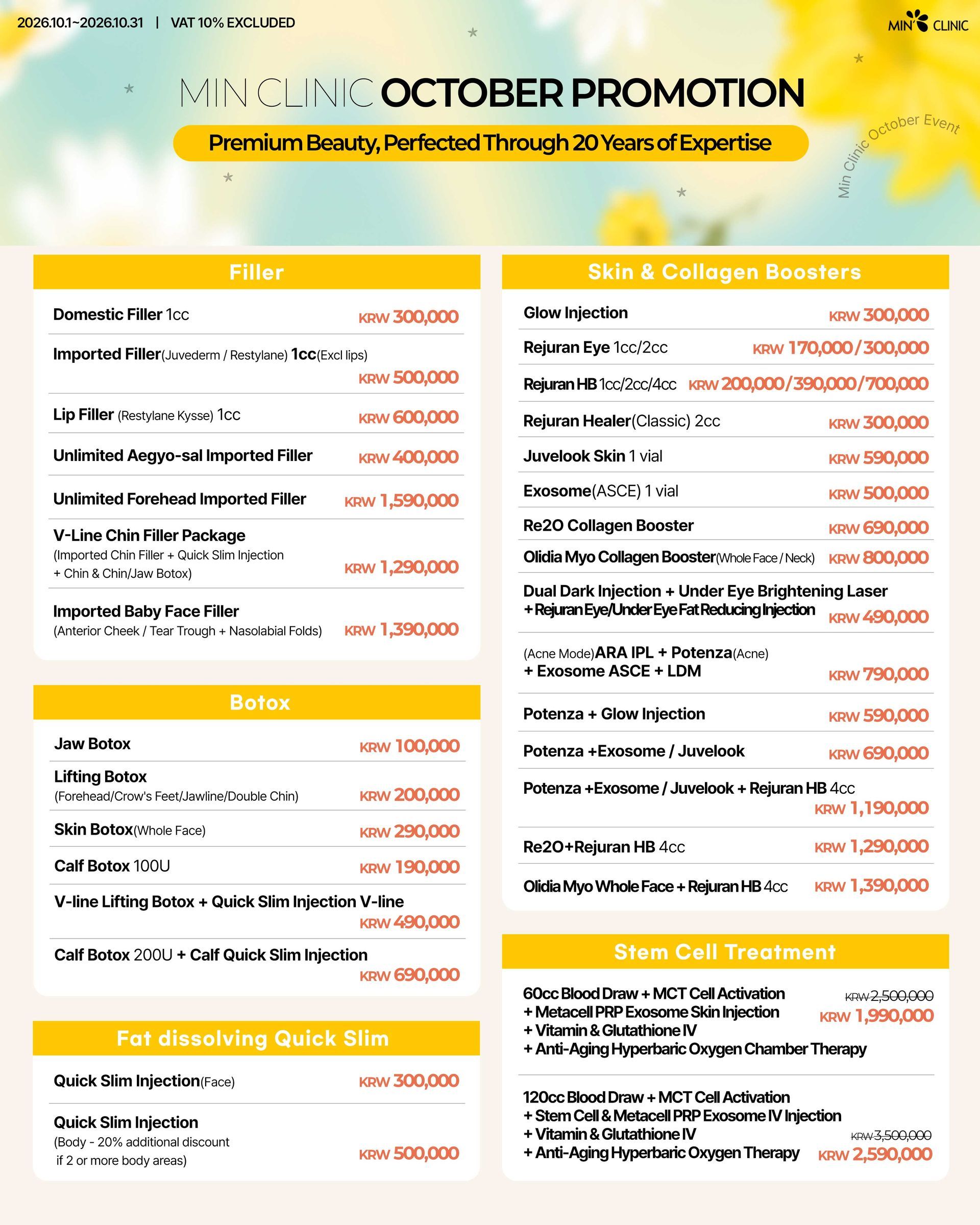
At MIN Clinic, ONDA lifting typically costs around KRW 500,000 to KRW 1,200,000, while Ultherapy typically costs around KRW 1,500,000 to KRW 3,500,000 per session depending on the areas and line count. Combination plans can offer better value than booking each treatment separately. See current offers on our event price list.
8. Why combining often works best
When fat and laxity are both present, ONDA can reduce the heaviness first, and Ultherapy can then lift and tighten the tissue above it. The result is a cleaner jawline and more defined contour that would be hard to achieve with either treatment alone. Depending on your schedule, both can be planned in one visit or across a short trip.
9. Who should choose which?
Choose Ultherapy if your face is relatively slim but has started to sag.
Choose ONDA if your face feels full or round but your skin is still fairly firm.
Consider both if you see heaviness and sagging together.
If a strong jaw muscle is making the lower face look wide, jaw Botox may also be part of the plan.
An AI 3D skin analysis and consultation at MIN Clinic help show which layer is responsible.
10. Questions to ask during consultation
Is my concern mainly fat, laxity or muscle? Which treatment should come first? How many sessions will I need, and when will I see the result? Clear answers to these questions help you avoid paying for a treatment that does not match your face.
Conclusion
Neither treatment is simply better — they answer different questions. Ultherapy lifts loose tissue, ONDA reduces fullness, and together they can reshape the lower face without surgery or downtime. Send your photos to our English-speaking team on WhatsApp for a personal suggestion, or compare our ONDA lifting and Ultherapy pages.
This article is for general information and does not replace medical advice. Results vary by individual, and a doctor's consultation is required before any treatment.