
Rejuran vs Juvelook: Which Skin Booster Should You Choose?
Rejuran and Juvelook are two of the most requested skin boosters in Gangnam, and visitors often ask which one they should choose. Both improve skin quality from within, both are injected, and both work best as a short course. But they use different ingredients, work through different mechanisms and suit slightly different concerns.
This guide compares the two in detail — ingredients, how they work, results, downtime, sessions and cost — and explains when it makes sense to use both.
1. What is Rejuran?
Rejuran Healer contains polynucleotides (PN), purified DNA fragments that support the skin's natural repair processes. It strengthens the skin barrier, improves elasticity and texture, and helps damaged or sensitised skin recover. It is often described as a regenerating or healing booster.
Rejuran is a good match for skin that looks tired, thin, dry or reactive, and for skin recovering from sun damage, acne or laser treatments.
2. What is Juvelook?
Juvelook combines PDLLA, a biostimulator that triggers the skin to produce new collagen, with hyaluronic acid for hydration. Over several weeks, it gradually thickens and firms the skin, softens fine lines and can improve shallow scars. It is often described as a collagen-building booster.
Juvelook suits skin that has started to feel thinner or crepey, early wrinkles, and textural concerns such as shallow acne scars.
3. The key difference
Rejuran focuses on repair and overall skin health — ideal for thin, damaged, sensitive or tired-looking skin.
Juvelook focuses on building collagen within the skin — ideal for fine lines, mild volume loss in the skin, shallow scars and crepey texture.
If your main goal is healthier, calmer, more resilient skin, Rejuran usually comes first. If your main goal is firmer skin with fewer fine lines, Juvelook is often the better match.
4. Results timeline
Rejuran usually brings a gradual improvement in glow and texture after the first sessions, building over a course of three to four treatments. Juvelook gives some early hydration from hyaluronic acid, but its main effect develops over several weeks as collagen forms, typically after two to three sessions. Because Juvelook stimulates your own collagen, results can be long-lasting.
5. Downtime
Both treatments create small bumps at the injection points. With Rejuran, these usually settle within one to two days. With Juvelook, they may last two to three days. Mild redness or small bruises can occur with either, especially under the eyes or in areas with thin skin. Most people can wear light make-up the next day.
6. Comfort
Rejuran is often described as slightly more uncomfortable because of its texture and the number of injection points. Juvelook may be delivered by needle or cannula depending on the area. In both cases, numbing cream and careful technique keep treatment manageable.
7. Sessions and maintenance
Rejuran: three to four sessions, spaced two to four weeks apart, then maintenance about every six months.
Juvelook: two to three sessions spaced several weeks apart, with maintenance based on your skin's response.
If you visit Seoul once, the first session of either booster can be done during your trip, with later sessions planned for a future visit.
8. Cost in Seoul
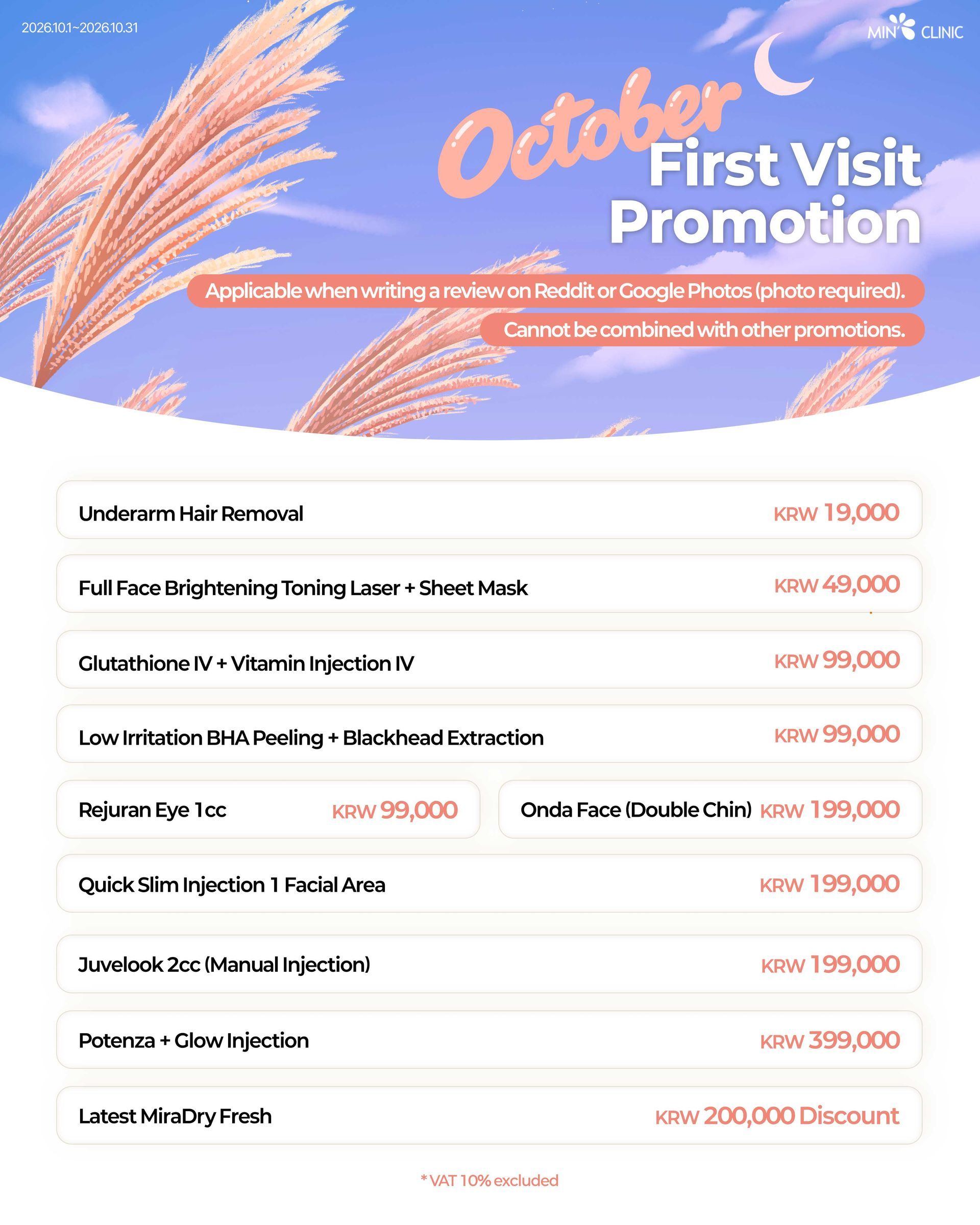
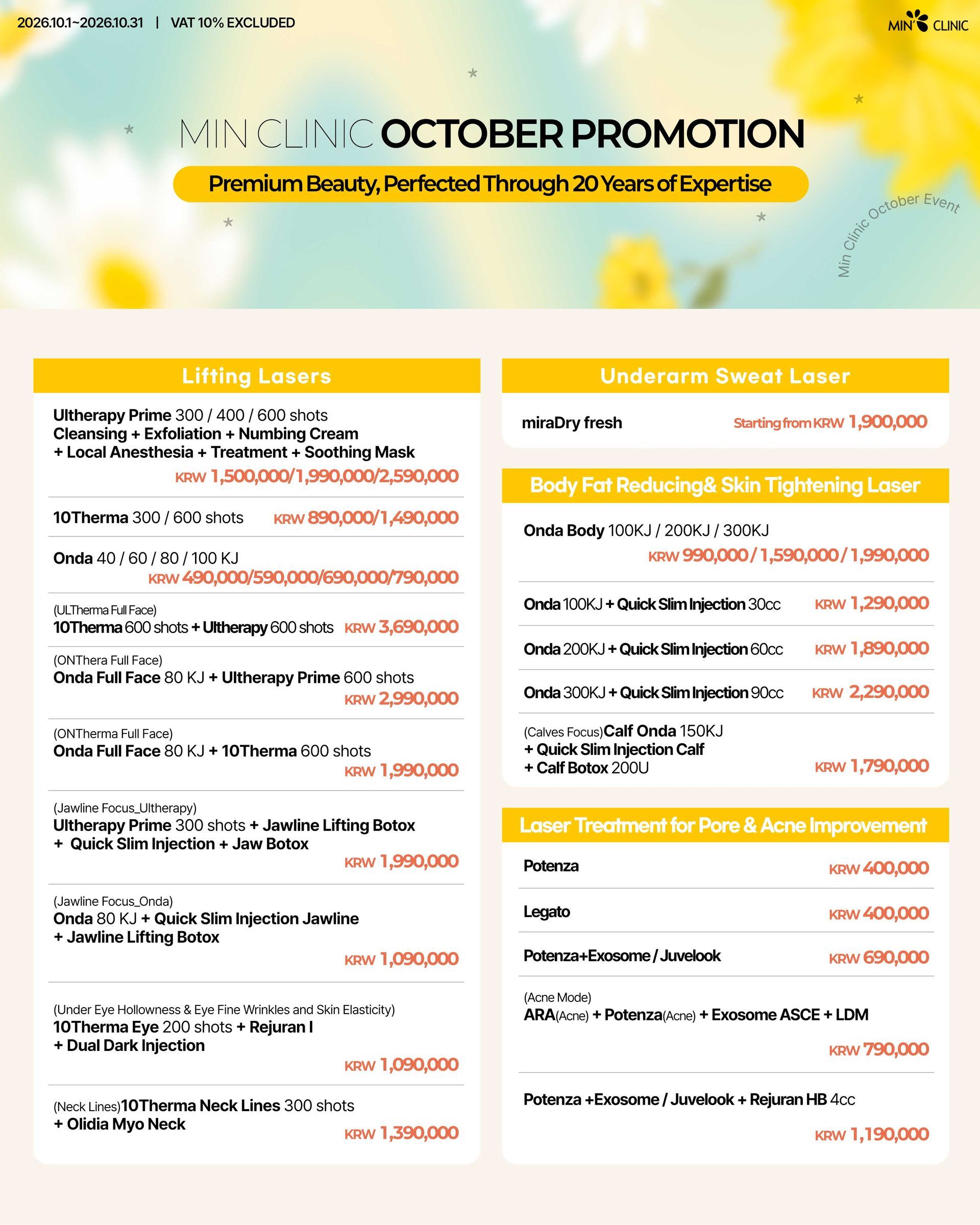
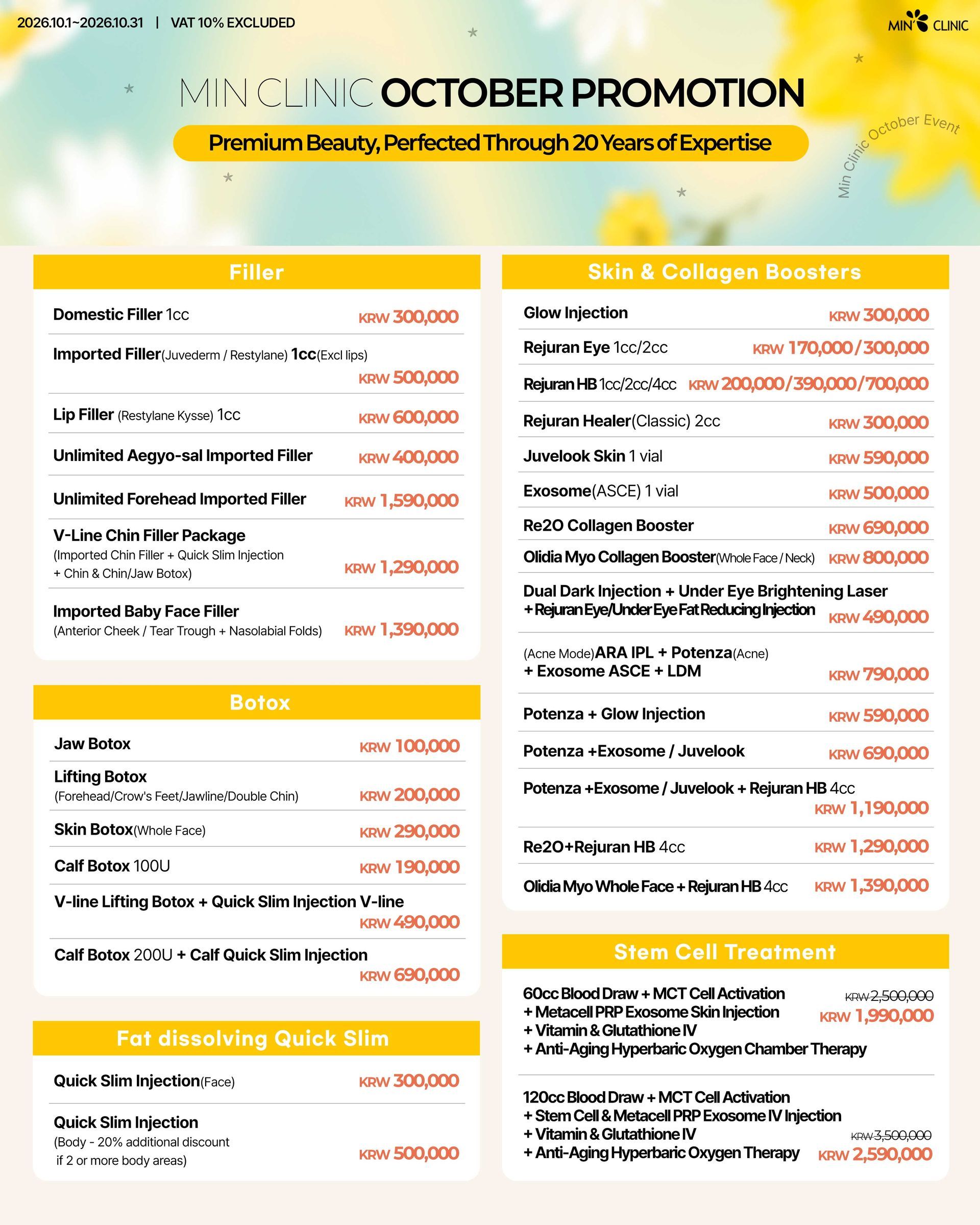
At MIN Clinic, Rejuran Healer typically costs around KRW 300,000 to KRW 700,000 per session, and Juvelook around KRW 500,000 to KRW 1,200,000, depending on the area and amount used. See current offers on our event price list.
9. Can you combine them?
Yes. Some treatment plans alternate Rejuran and Juvelook, or use Rejuran for overall skin health and Juvelook for specific areas such as scars, the cheeks or fine lines. Your doctor will plan the spacing to avoid overloading the skin and to make each treatment work as well as possible.
10. Combining with lifting
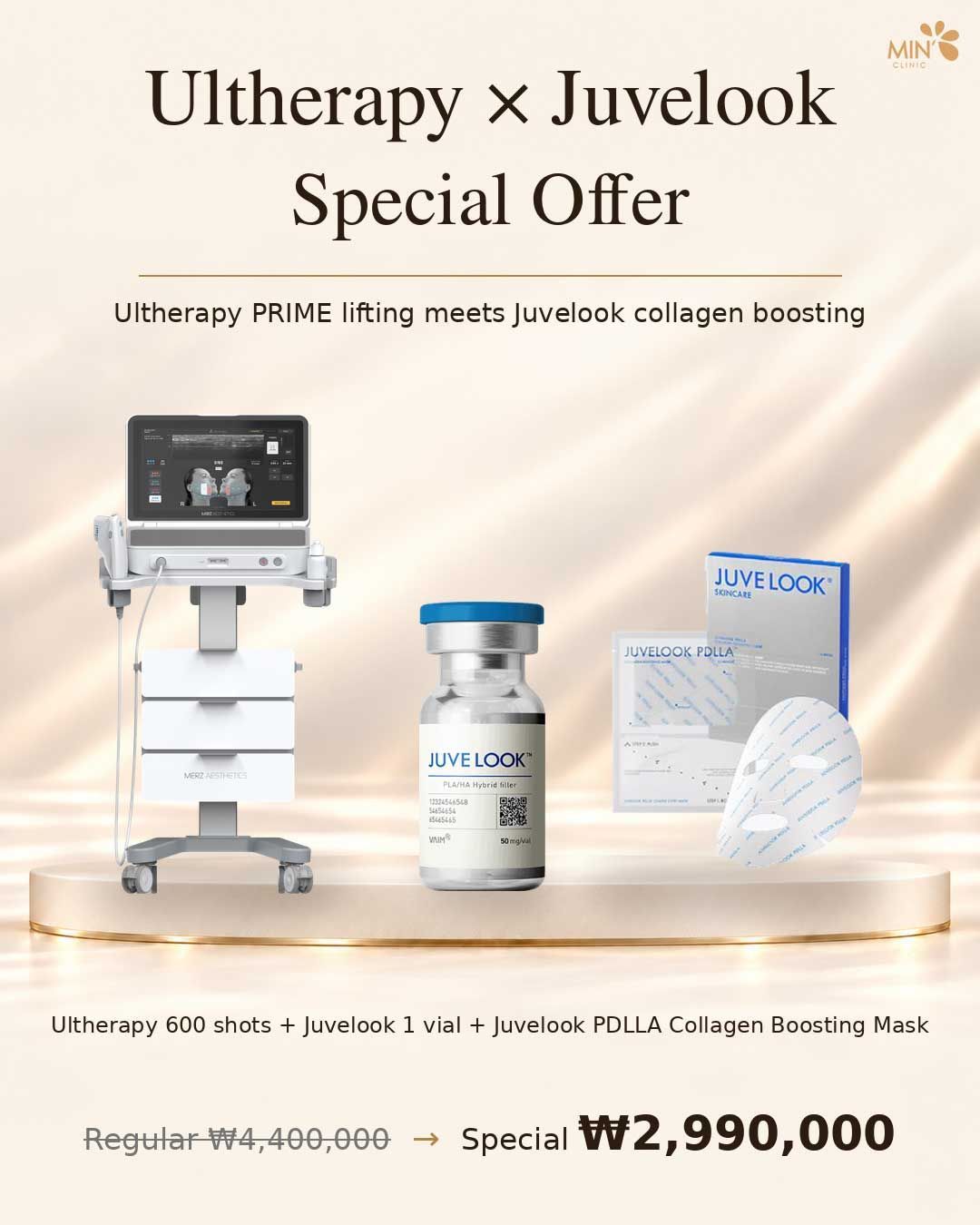
Both boosters pair well with lifting treatments such as Ultherapy or 10THERMA. Lifting addresses structure, while boosters improve skin quality, so the face looks lifted and healthy at the same time.
11. How to decide
An AI 3D skin analysis and consultation help identify whether your skin needs repair, collagen or both. Bring photos of your skin in natural light, and tell the doctor about any sensitivities or previous treatments.
Conclusion
Choose Rejuran if your priority is repair, barrier strength and glow; choose Juvelook if you want collagen, firmness and smoother fine lines or scars. Many people benefit from both over time. Send your photos to our English-speaking team on WhatsApp, or compare our Rejuran Healer and Juvelook pages.
This article is for general information and does not replace medical advice. Results vary by individual, and a doctor's consultation is required before any treatment.