
Skin Booster Injections vs Laser Treatments: Which Should You Choose?
Skin boosters and laser treatments are the two pillars of Korean skin care in clinics. Visitors often compare them as if they were alternatives, but they are designed to treat different concerns. Choosing well starts with understanding what each one does best, and recognising when your skin needs both.
This guide explains what skin boosters and lasers each treat, how they compare in downtime, sessions and cost, and why combining them is so common in Gangnam.
1. What skin boosters do
Skin boosters are injections that improve skin quality from within. Rejuran Healer supports repair and elasticity through polynucleotides, Juvelook stimulates collagen with PDLLA and hyaluronic acid, hyaluronic acid boosters hydrate, and exosome calms the skin and supports recovery.
Boosters are ideal for dullness, dryness, fine lines, thin skin and general texture. They improve how healthy the skin looks and feels, rather than targeting a specific spot or colour.
2. What lasers do
Lasers use light energy to target specific problems with precision. Pico laser and laser toning target pigmentation such as sun spots, freckles and melasma. CO2 fractional laser resurfaces scars and rough texture. Other lasers target redness or tighten skin.
Lasers are ideal for colour concerns and surface problems where a precise target exists.
3. Which concern suits which?
Pigmentation, sun spots and melasma: laser.
Acne scars: laser or RF microneedling, often with boosters.
Dryness, dullness and lack of glow: skin boosters.
Fine lines and thin skin: skin boosters, sometimes combined with RF tightening.
Enlarged pores: RF microneedling such as Potenza, often with boosters.
Redness and sensitivity: calming treatments such as exosome, sometimes with specific lasers.
4. Downtime compared
Laser toning has almost no downtime. Pico laser usually causes mild redness and tiny crusts on treated spots for about a week. CO2 fractional laser involves about five to seven days of downtime. Skin boosters typically leave small bumps for one to three days, depending on the product.
5. Sessions compared
Laser toning for melasma often needs six to ten sessions, while pico laser for distinct spots may need one to three. Skin boosters typically need two to four sessions for the best result. Both often benefit from periodic maintenance.
6. Cost in Seoul
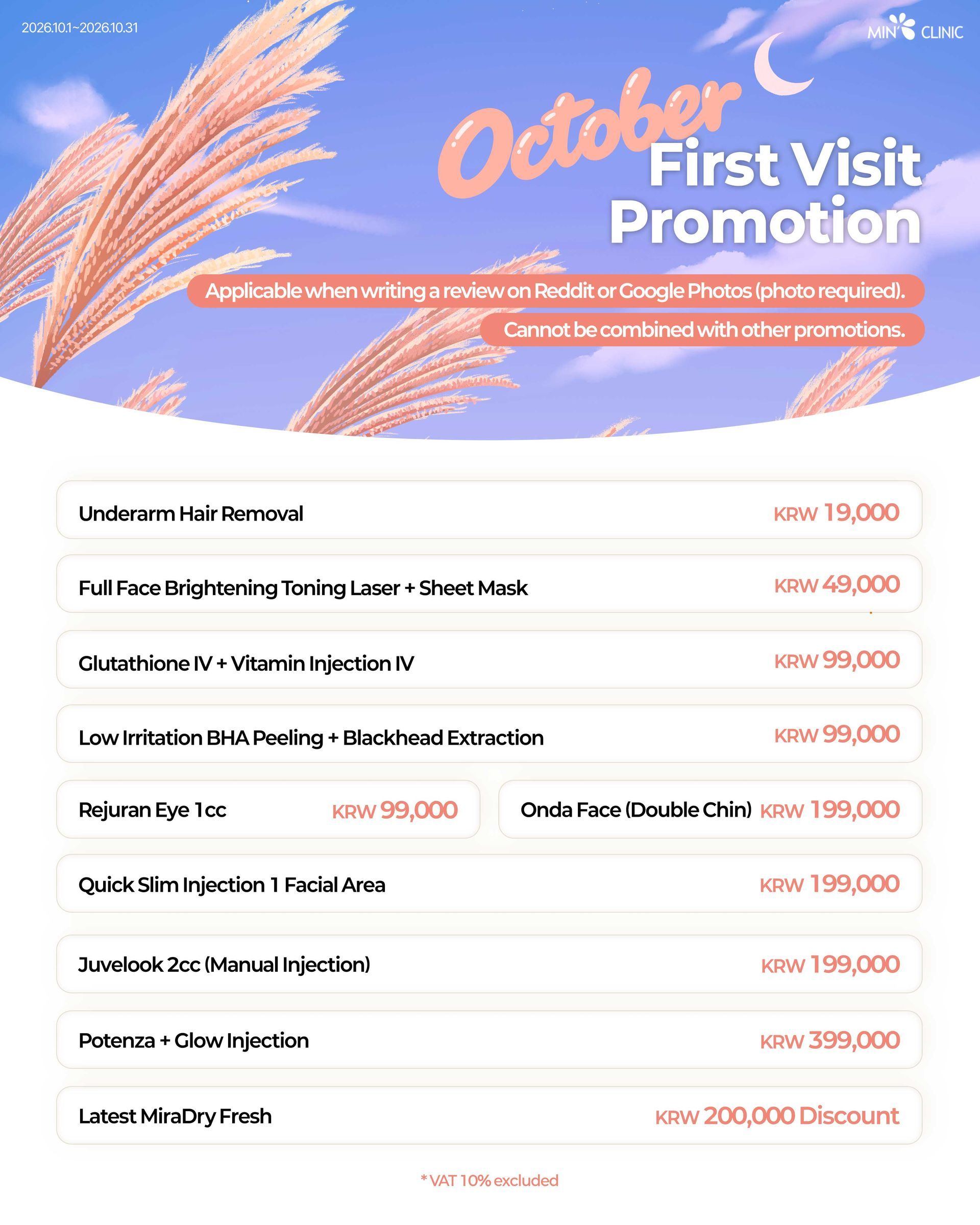
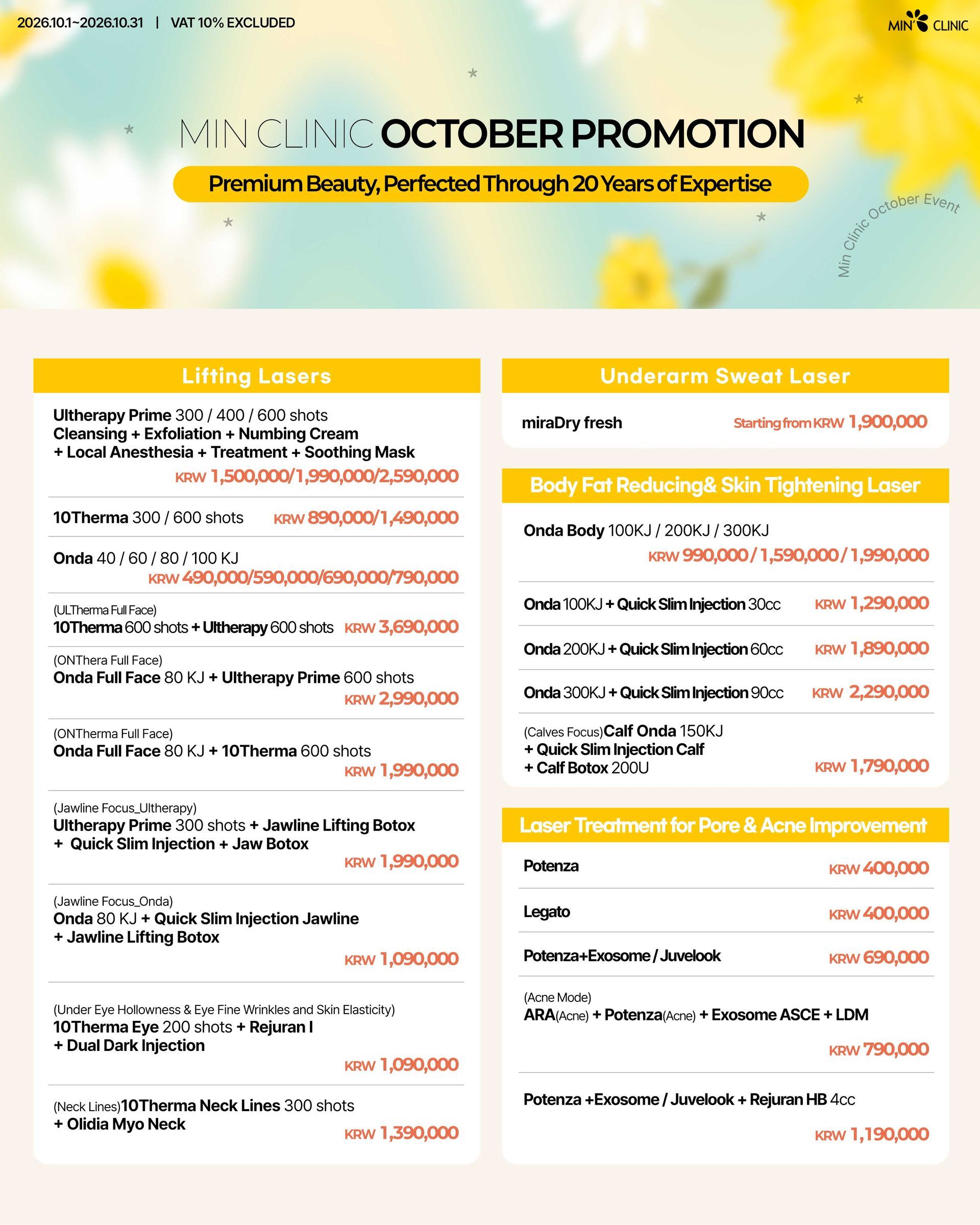
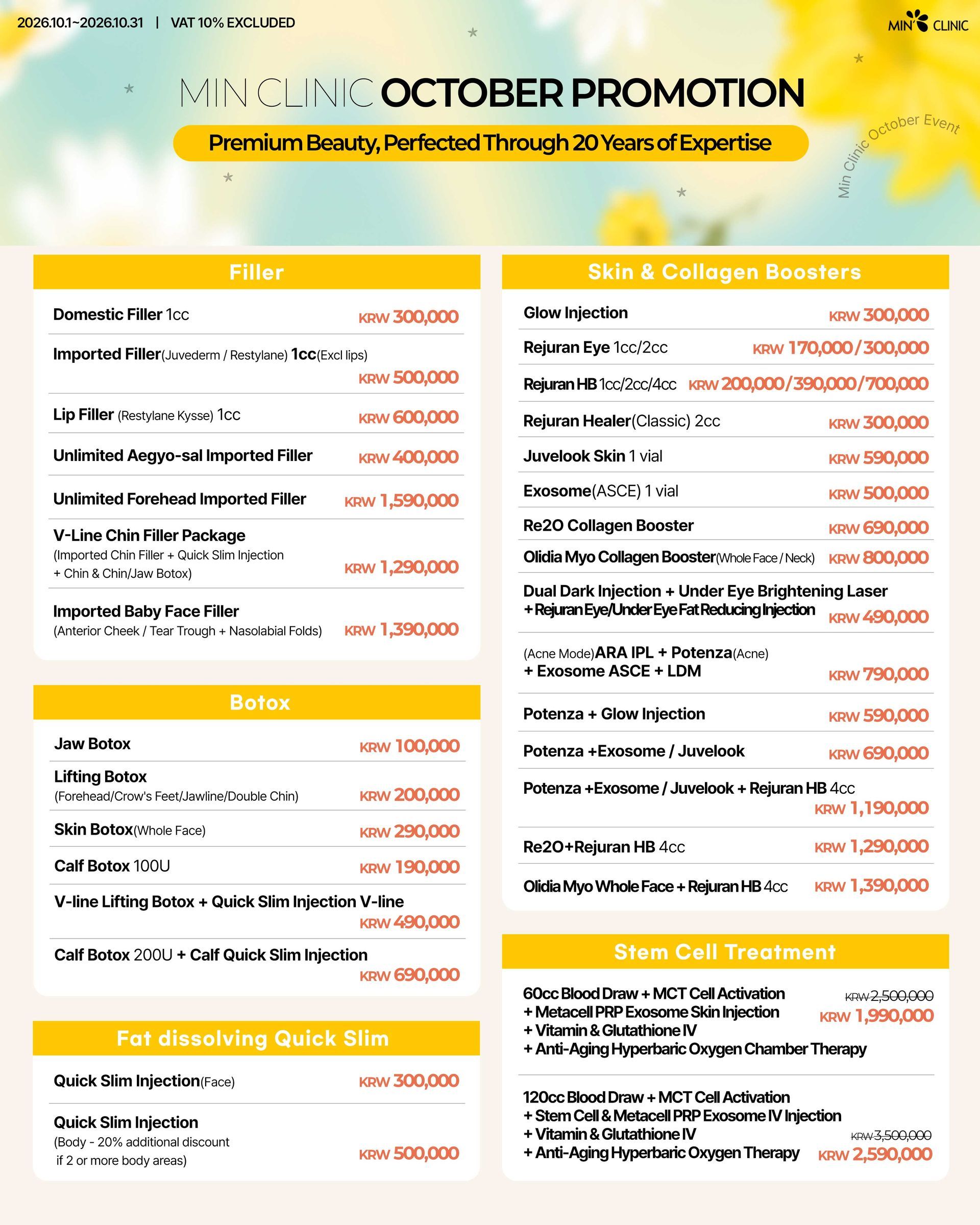
At MIN Clinic, pico laser typically costs around KRW 200,000 to KRW 600,000 per session, Rejuran Healer KRW 300,000 to KRW 700,000 per session, and Juvelook KRW 500,000 to KRW 1,200,000. See our event price list for current offers.
7. Why combining often works best
Lasers correct specific problems, while boosters improve the skin's overall health and help it recover. For example, pico laser for pigmentation combined with Rejuran for skin strength is one of the most popular plans in Gangnam. Laser followed by exosome is another common combination that helps redness settle faster.
8. Planning around your trip
Schedule treatments with more downtime early in your stay. Many visitors combine a laser with a booster in one visit, then continue a booster course or laser series on later trips.
9. Frequently asked questions
Can I have a laser and a booster on the same day? Often yes; your doctor will decide the order.
Which gives faster results? Lasers often show change in pigment within weeks, while boosters improve glow within one to two weeks and build further over a course.
Do I need both? Not always. If your concern is only pigmentation or only dryness, one may be enough.
Conclusion
Choose laser for pigmentation, scars and surface concerns, and skin boosters for hydration, elasticity and fine lines. Many people get the best result from combining both. Send your photos to our English-speaking team on WhatsApp, or explore our pico laser and skin boosters pages.
This article is for general information and does not replace medical advice. Results vary by individual, and a doctor's consultation is required before any treatment.