
10THERMA vs Ultherapy: RF vs HIFU Skin Tightening
10THERMA and Ultherapy are both non-surgical lifting treatments with little or no downtime, so it is easy to see them as interchangeable. In practice, they belong to two different energy families — radiofrequency (RF) and high-intensity focused ultrasound (HIFU) — and they reach different depths, feel different during treatment and give slightly different kinds of improvement.
This guide explains how RF and HIFU work, what each does best, how results and comfort compare, typical costs in Seoul, and why many patients end up combining the two rather than choosing just one.
1. Two different energy types
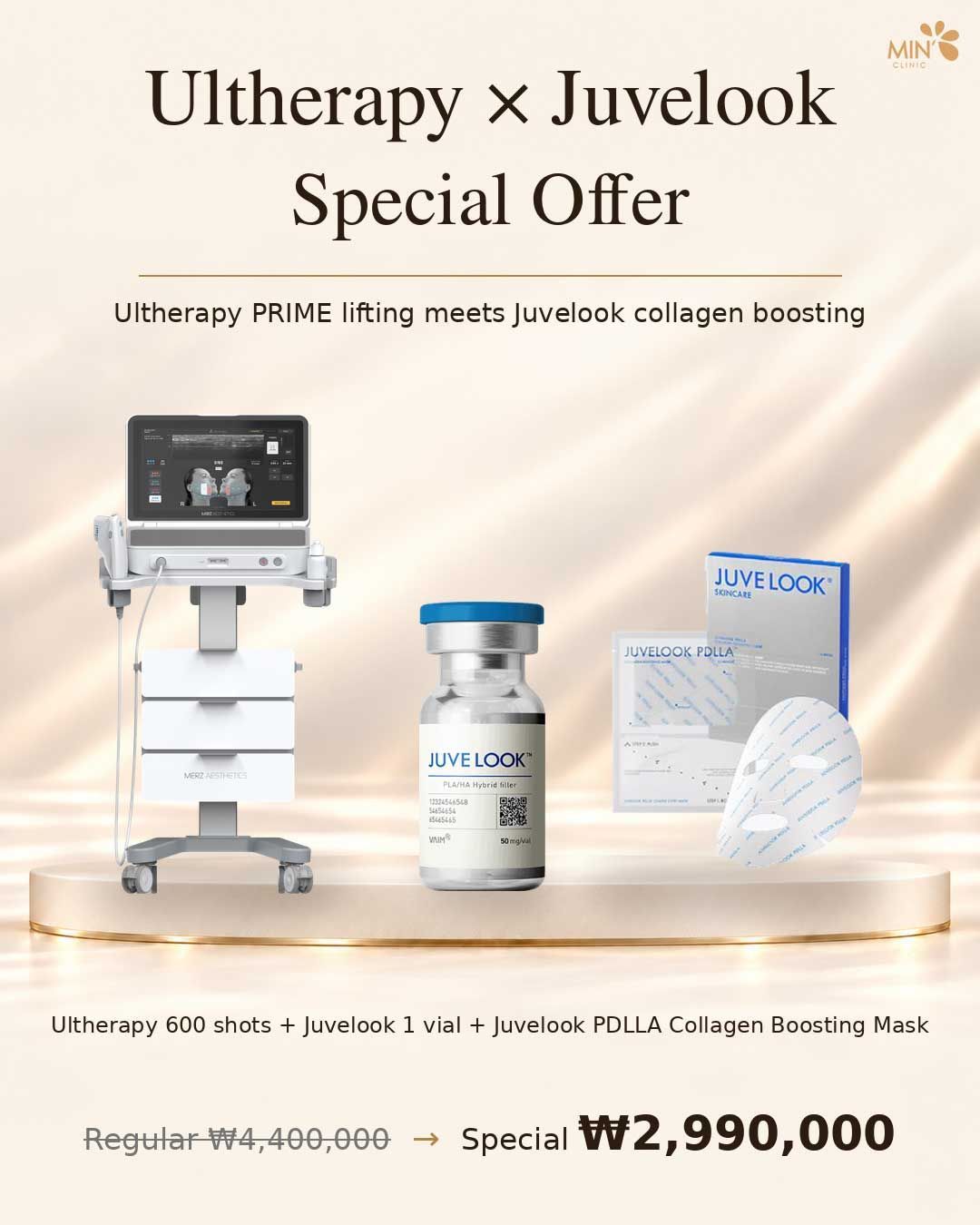
Ultherapy is a form of HIFU, but with an important difference: real-time imaging. It focuses ultrasound energy into small points at precise depths, including the SMAS layer, the supportive structure tightened in a surgical facelift. It lifts from the foundation of the face.
10THERMA uses monopolar RF. Instead of focused points, it heats a broader volume of tissue in the deeper dermis and the layer just beneath it. It tightens and improves skin quality from within the skin itself.
A simple way to remember the difference: Ultherapy lifts the structure, while 10THERMA firms the fabric.
2. Depth and precision
Because HIFU focuses energy at set depths, it can reach the SMAS layer more precisely than RF. That makes Ultherapy particularly effective for structural changes such as a drooping brow or early jowls. RF spreads heat more evenly through the skin, which suits overall tightening, texture and crepiness. Neither approach is better in general; they are designed for different targets.
3. What each does best
Ultherapy: lifting the brow, defining the jawline, improving early jowls and tightening the skin under the chin.
10THERMA: improving crepey or loose skin, refining texture, firming the cheeks and neck and giving an overall tighter, smoother look.
If your main concern is that things have moved down, Ultherapy usually answers it better. If your concern is that skin has become thinner, looser or less smooth, 10THERMA often answers it better.
4. Results and longevity
Both treatments build results gradually as new collagen forms, with the peak around two to three months after treatment. Original Ultherapy results typically last about a year, while Ulthera Prime and 10THERMA results typically last around 12 to 18 months at MIN Clinic. Lifestyle, sun exposure, weight changes and skin quality affect how long results last for each person.
5. Comfort during treatment
Ultherapy produces deep warmth and brief prickling as each line is delivered, especially near bone, so numbing cream is applied beforehand. 10THERMA produces a hot pulse at the surface, with cooling between pulses. Many patients find 10THERMA more comfortable, but both are well tolerated with appropriate settings and a doctor who adjusts energy area by area.
6. Downtime
Neither treatment has significant downtime. After Ultherapy, mild redness and occasional tenderness or slight swelling along the jaw can last a few days. After 10THERMA, redness usually settles within a few hours. Both fit easily into a travel schedule, and most people can fly the next day.
7. Which suits which face?
Ultherapy may suit you better if you have visible sagging, a softening jawline or early jowls and enough facial volume to support a stronger lift.
10THERMA may suit you better if your face is slim, if your main concern is loose or crepey skin and texture, or if you are particularly sensitive to discomfort.
For slim faces, heavy deep-layer energy can sometimes make areas look slightly hollow, so doctors often favour RF or a lighter ultrasound plan.
8. Cost in Seoul
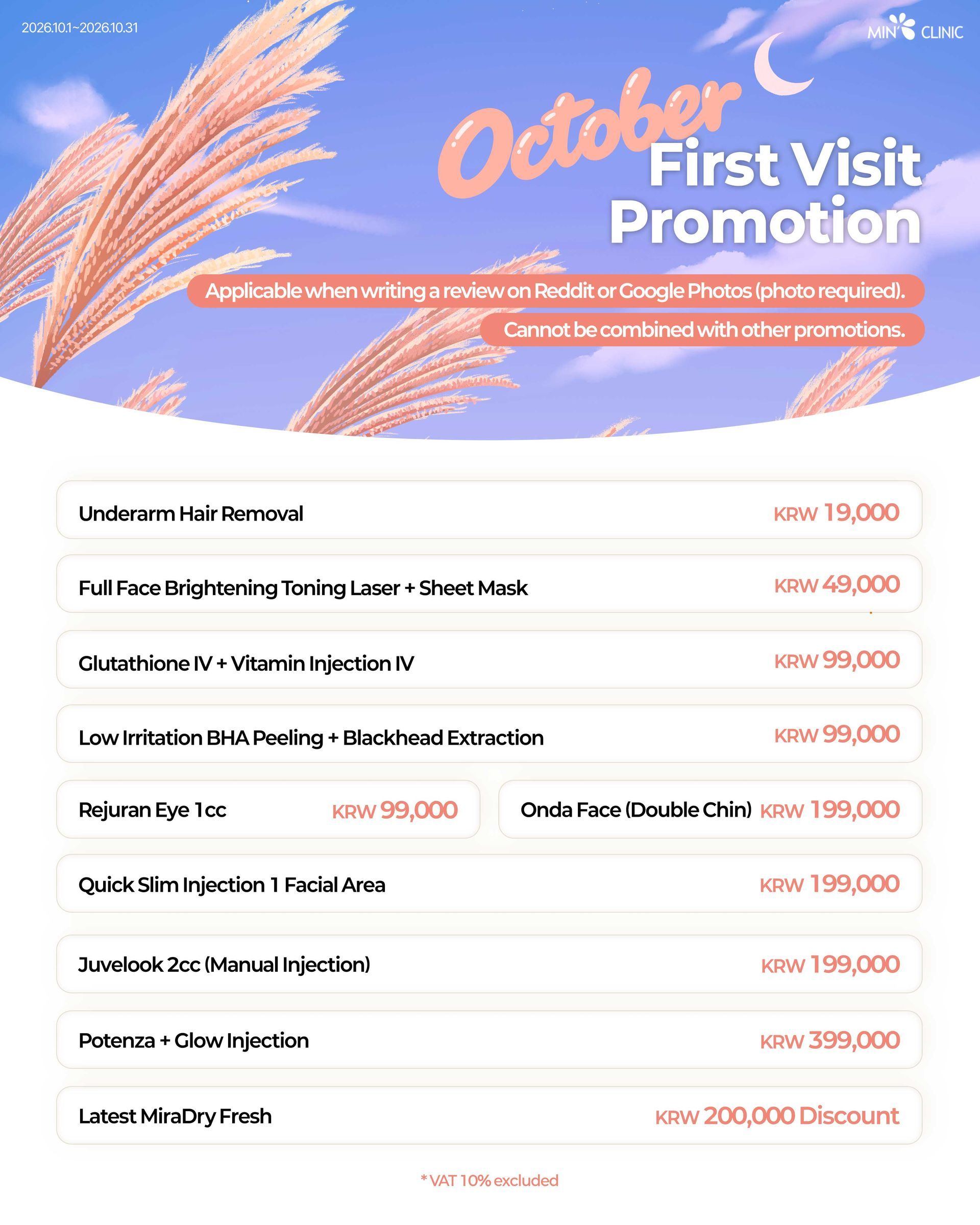
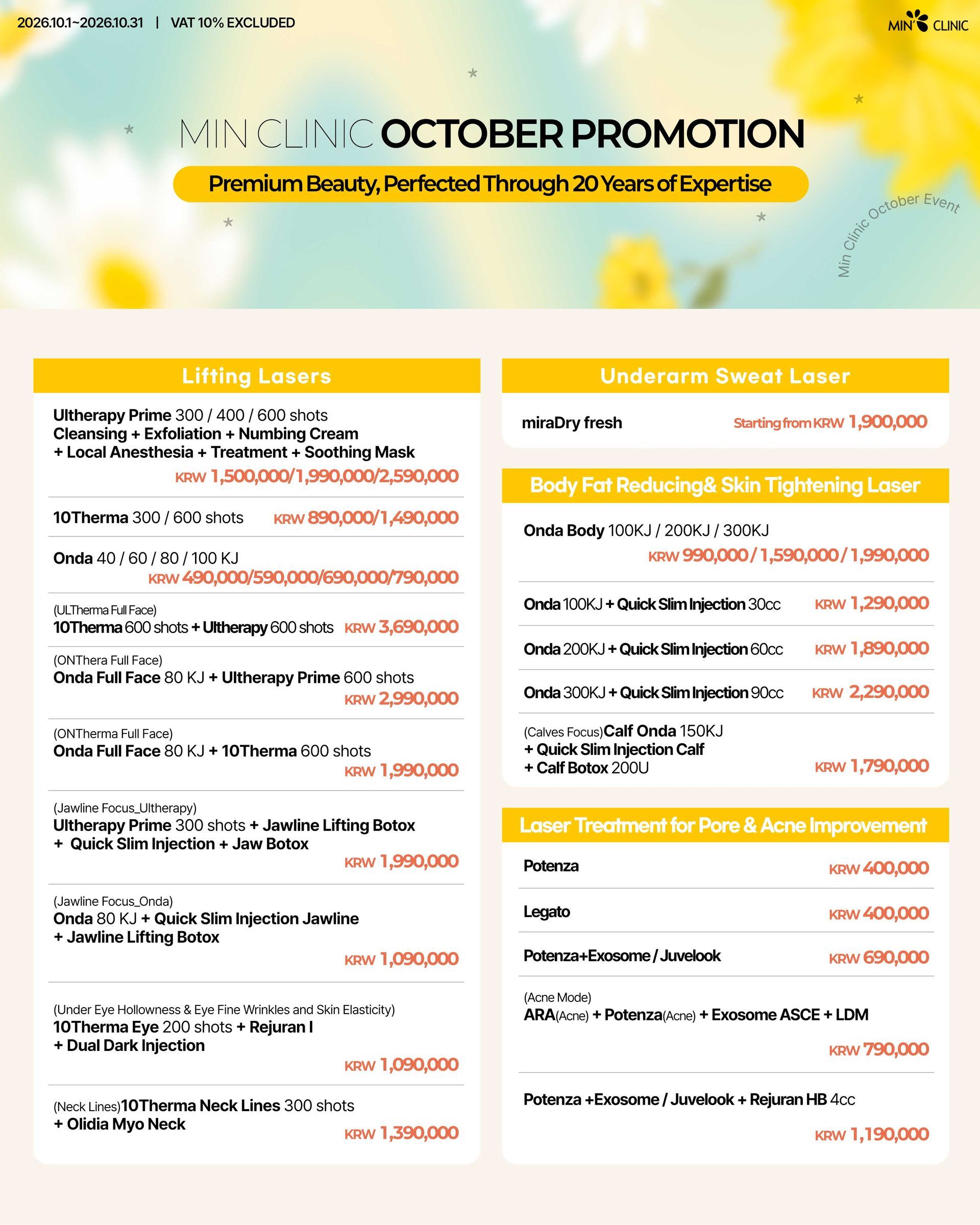
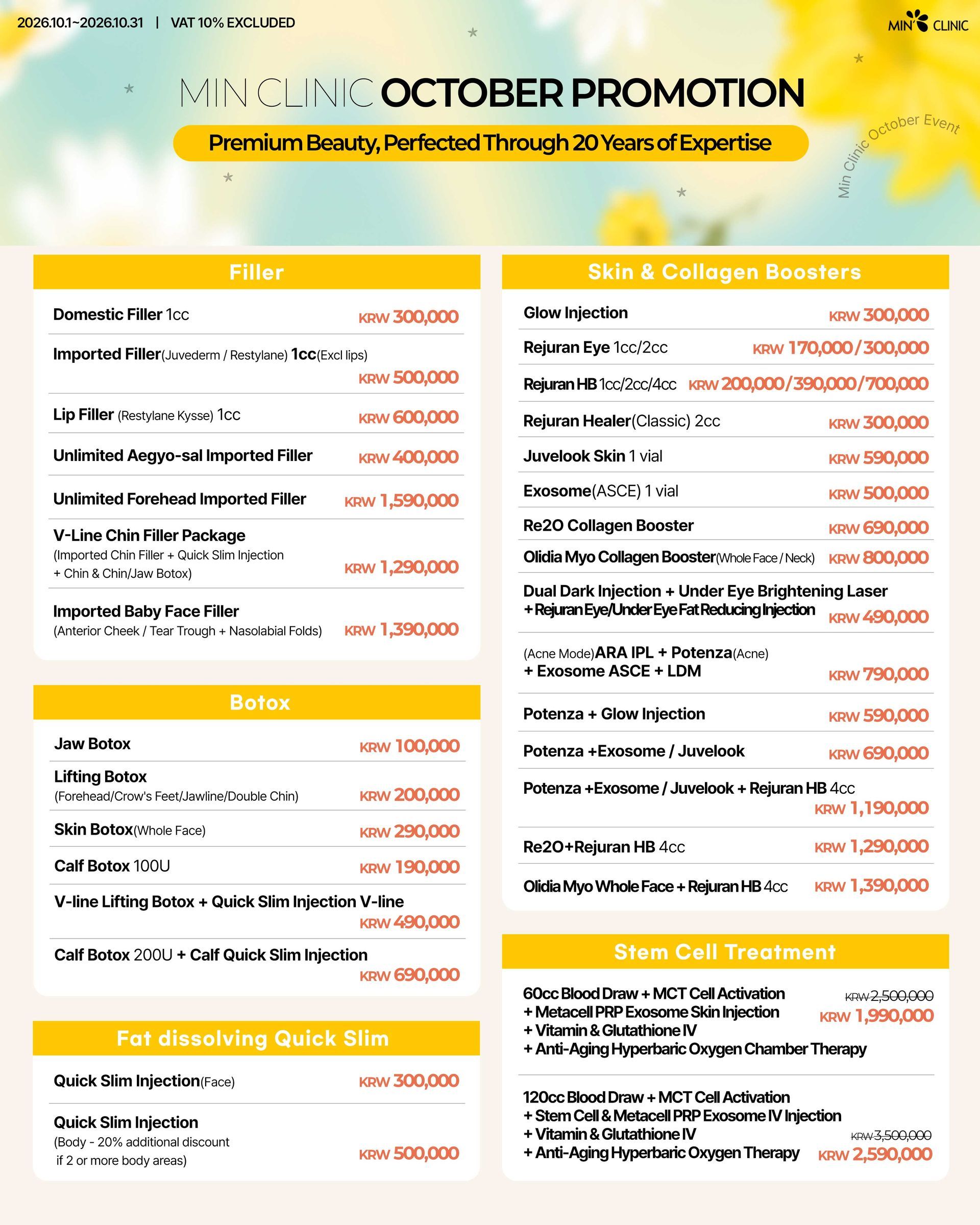
At MIN Clinic, Ultherapy typically costs around KRW 1,500,000 to KRW 3,500,000 per session, and 10THERMA around KRW 800,000 to KRW 2,500,000, depending on areas and line or shot count. Combination plans may offer better value. See current offers on our event price list.
9. Combining RF and HIFU
Because they work at different depths, the two treatments complement each other well. A combined plan lifts the deeper layers with Ultherapy and tightens the skin with 10THERMA, often giving a fuller and more natural result than either alone. Some patients have both in one visit, while others alternate them year by year for maintenance.
10. Beware of generic HIFU
Many clinics offer "HIFU lifting" at low prices using devices without real-time imaging. These may deliver energy without confirming depth, which can reduce results or raise the risk of discomfort and uneven outcomes. When comparing quotes, ask for the device name and confirm that you are receiving genuine Ultherapy or Ulthera Prime.
11. How to decide
An AI 3D skin analysis and doctor consultation show whether your concern is mainly structural, mainly skin quality, or both. From there, the doctor can recommend RF, HIFU or a combination and suggest a schedule that fits your trip.
Conclusion
Ultherapy (HIFU with imaging) is the stronger choice for structural lift, while 10THERMA (monopolar RF) excels at firming skin and improving texture, especially on slimmer faces. Many patients benefit from both. Send your photos to our English-speaking team on WhatsApp for a personal recommendation, or compare our 10THERMA and Ultherapy pages.
This article is for general information and does not replace medical advice. Results vary by individual, and a doctor's consultation is required before any treatment.