
PRP Facial Rejuvenation in Gangnam: Procedure and Recovery
PRP, or platelet-rich plasma, is a skin rejuvenation treatment that uses your own blood to support the skin's natural renewal. It appeals to people who prefer a treatment made from their own body rather than an added product, and it has been used in many areas of medicine for its role in tissue repair. In Gangnam, PRP is used for dull skin, fine lines, texture and as part of acne scar and under-eye plans.
This guide explains what PRP is, what it can improve, the procedure step by step, what recovery looks like, how many sessions you need, typical costs and how PRP fits with other treatments.
1. What is PRP?
PRP is made by taking a small sample of your blood and spinning it in a centrifuge. This separates the blood into layers and concentrates the platelets in a portion of the plasma. Platelets contain growth factors that play a role in healing, tissue repair and collagen production. The concentrated plasma is then injected into the skin or applied during microneedling.
Because PRP comes from your own blood, it is described as autologous. The quality of PRP can vary between individuals and depends on the preparation method.
2. What can PRP improve?
Dull, tired-looking skin that lacks glow.
Fine lines and mild crepiness.
Uneven texture and mild acne scarring.
Under-eye skin quality, with careful technique.
Skin recovery after resurfacing treatments.
PRP improves skin quality gradually rather than lifting or adding volume.
3. The procedure step by step
Blood draw: a small amount of blood is taken from your arm, similar to a routine blood test.
Processing: the sample is centrifuged to separate and concentrate PRP.
Numbing: numbing cream is applied to the face while the PRP is prepared.
Treatment: PRP is injected in small amounts across the treatment area or delivered with microneedling.
The whole process usually takes about 45 to 60 minutes, including preparation time.
4. What does it feel like?
The blood draw feels like a normal blood test. With numbing cream, the injections or microneedling usually feel like light pricking or pressure. Areas over bone or with thin skin may feel more sensitive. The doctor can adjust technique for comfort.
5. Recovery
Expect mild redness and possibly small bumps or bruises for about one to three days. If PRP is delivered with microneedling, the skin may look like it has mild sunburn for a day or two. Avoid make-up for the rest of the day, and avoid saunas, alcohol and intense exercise for a few days. Use gentle skincare and sunscreen.
6. Number of sessions
PRP works best as a course of two to three sessions, spaced about four weeks apart. Results build gradually as collagen improves, with improvement in glow and texture typically visible after a few weeks and more noticeable after the full course. Periodic maintenance can help keep results.
7. Cost in Seoul
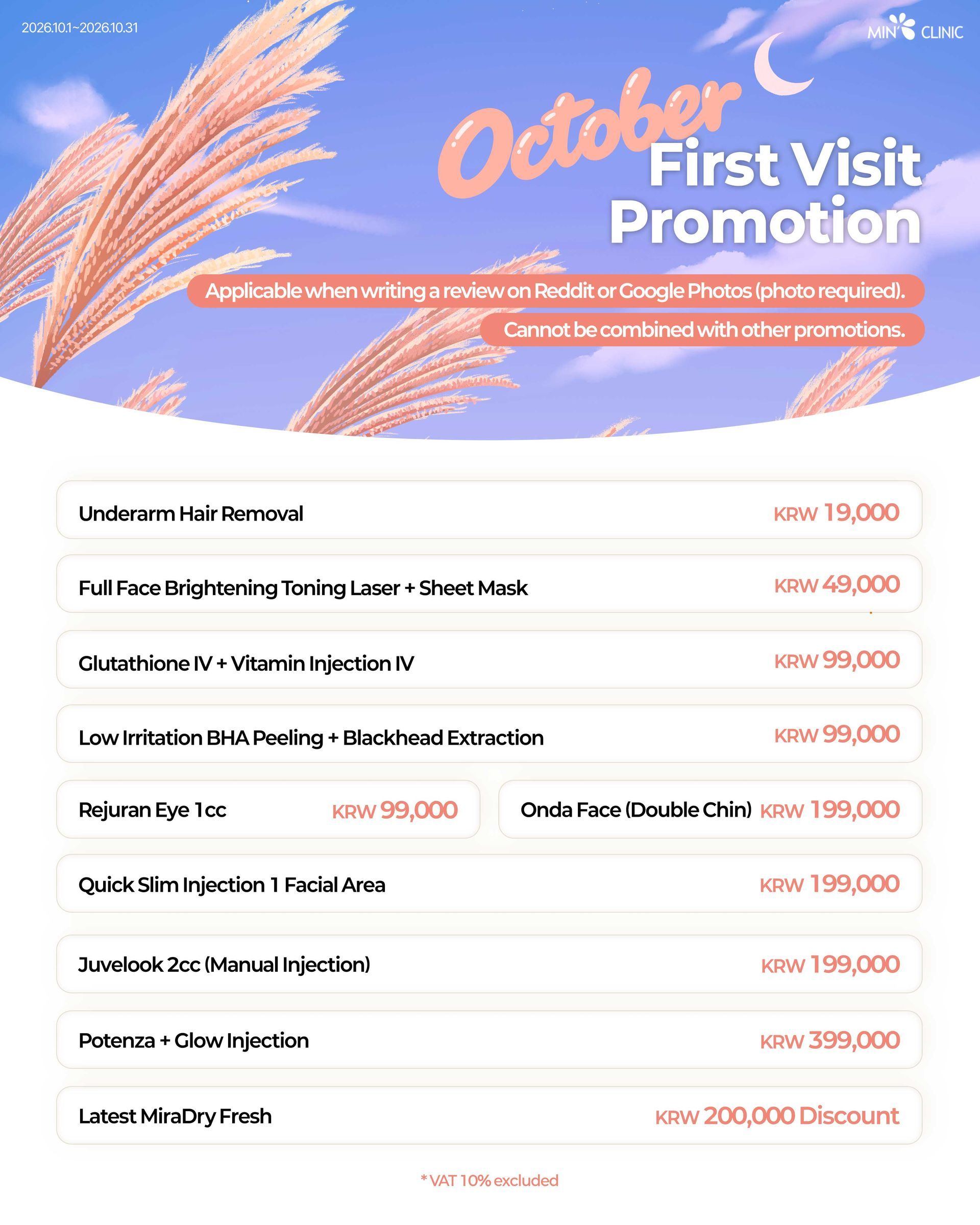
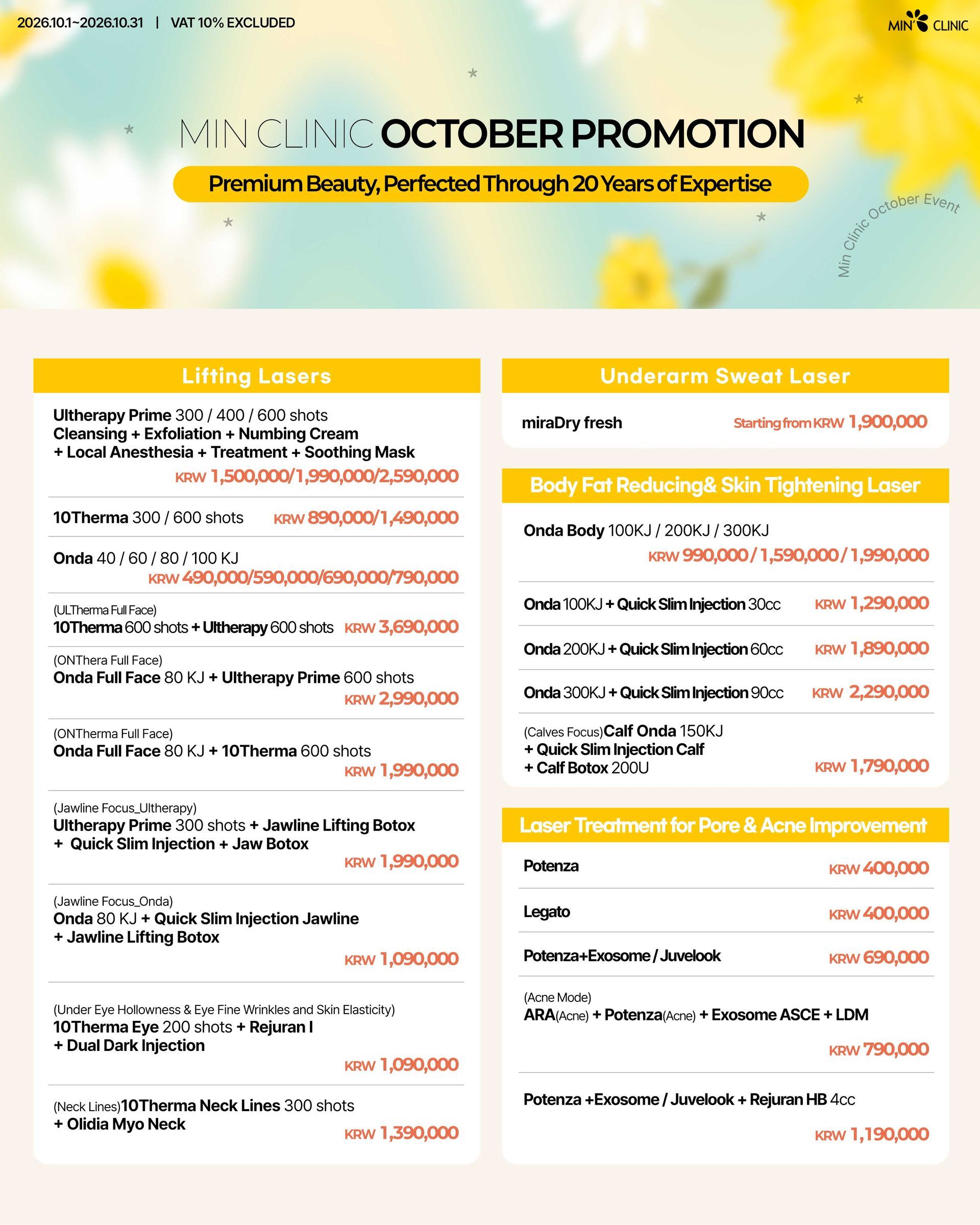
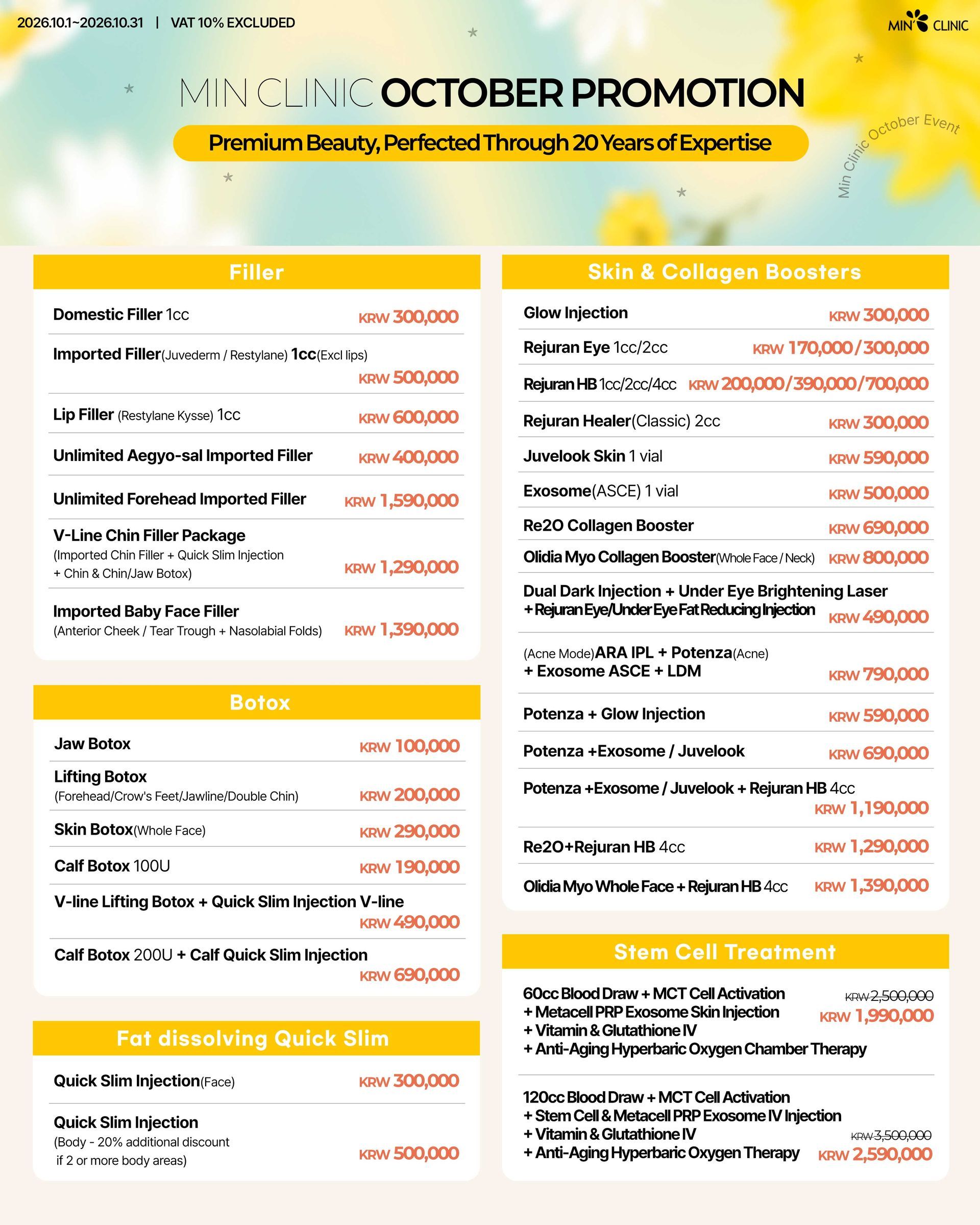
At MIN Clinic, PRP typically costs around KRW 300,000 to KRW 800,000 per session, depending on the method and area treated. See current offers on our event price list; foreign passport holders may be eligible for tax-free benefits.
8. Who is a good candidate?
PRP suits people who want natural rejuvenation using their own blood, including those who prefer to avoid added products. It may not be suitable for people with certain blood disorders, low platelet counts, those taking specific medications such as blood thinners, or those with active infections. Your doctor will review your medical history before treatment.
9. Combining PRP with other treatments
PRP is often combined with microneedling or Potenza for texture and scars, where it supports healing. It can also be alternated with skin boosters such as Rejuran or Juvelook, depending on your skin's needs.
10. Frequently asked questions
Is PRP safe? Because it uses your own blood, allergic reactions are very unlikely. Bruising and redness are the most common effects.
How soon will I see results? Many people notice improved glow within a few weeks, with more change after the full course.
Can I fly after PRP? Usually the next day, once redness has settled.
Is PRP better than Rejuran? They work differently; the better choice depends on your skin and preferences.
Conclusion
PRP facial rejuvenation uses your own platelets to improve glow, texture and fine lines, with about one to three days of mild redness and a course of two to three sessions. It is a natural option that combines well with microneedling and skin boosters. Message our English-speaking team on WhatsApp, or read more on our PRP injections page.
This article is for general information and does not replace medical advice. Results vary by individual, and a doctor's consultation is required before any treatment.