
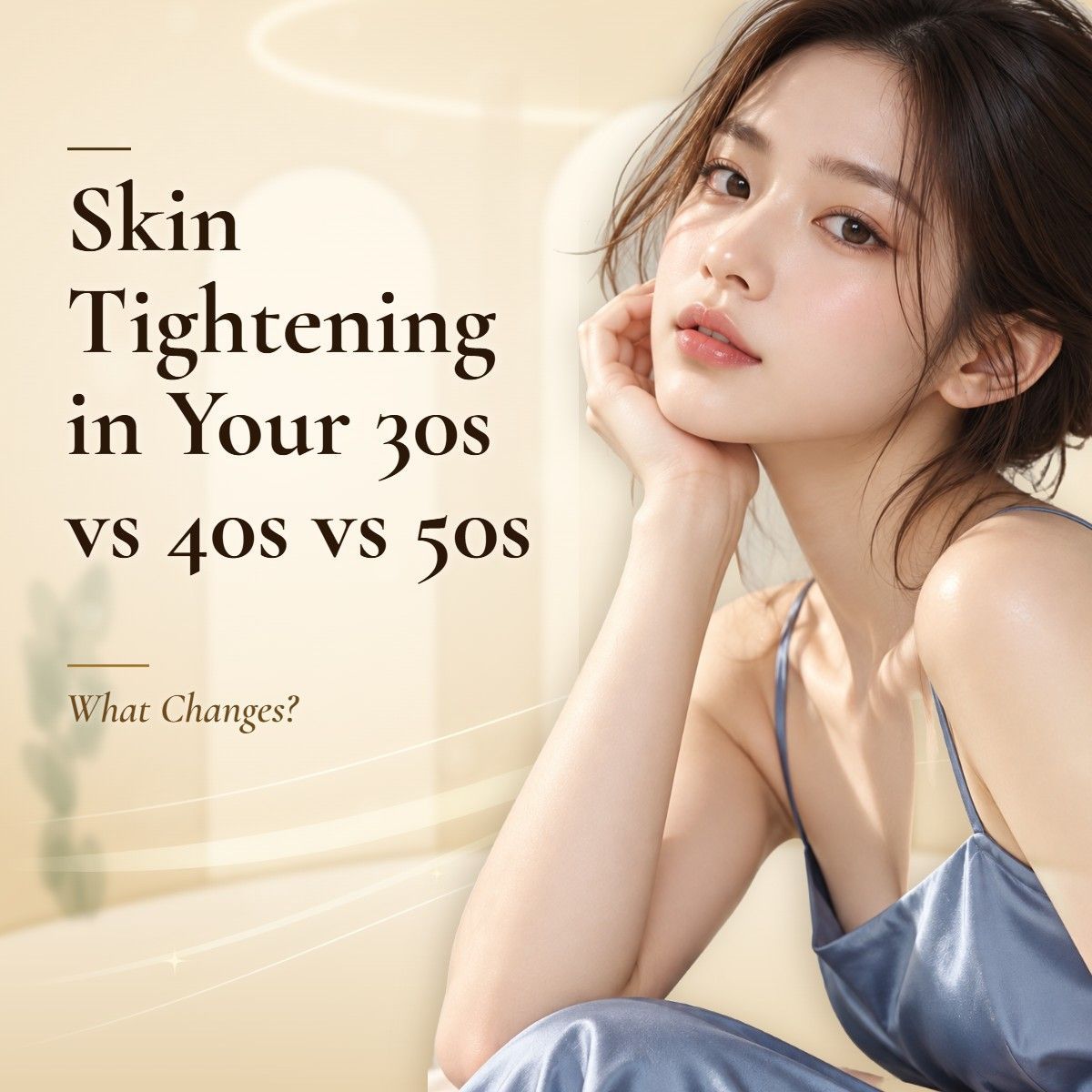
Skin Tightening in Your 30s vs 40s vs 50s: What Changes?
Skin does not age at the same pace or in the same way across every decade. The right tightening plan in your 30s is usually very different from the right plan in your 50s, and choosing a treatment designed for a different stage can mean paying for results you do not need — or missing the change you actually want.
This guide explains what happens to the skin and deeper tissues in each decade, which treatments tend to suit each stage, how maintenance changes over time and what lifestyle habits make the biggest difference at any age.
1. Your 30s: early changes and prevention
Collagen production begins to slow in the late 20s, and by the mid-30s many people notice slightly less bounce, fine lines around the eyes and the first softening of the jawline. Pores may look larger, and skin can appear duller after late nights. At this stage, skin quality matters as much as lift.
Common goals: prevention, glow and early definition.
Suitable options: a focused Ultherapy plan for the jaw or brow, 10THERMA for firmness and texture, and skin boosters such as Rejuran Healer for elasticity and glow. Jaw Botox may help if a strong masseter muscle makes the face look wide, and laser toning can keep tone even.
The aim in the 30s is to maintain collagen and keep small changes from becoming larger ones.
2. Your 40s: visible laxity begins
In the 40s, the SMAS layer and fat pads begin to descend more noticeably. Early jowls appear, the nasolabial folds deepen and the neck may start to loosen. Some people also lose volume in the temples and mid-face, which makes the face look tired even when skin quality is good.
Common goals: restore definition and slow further descent.
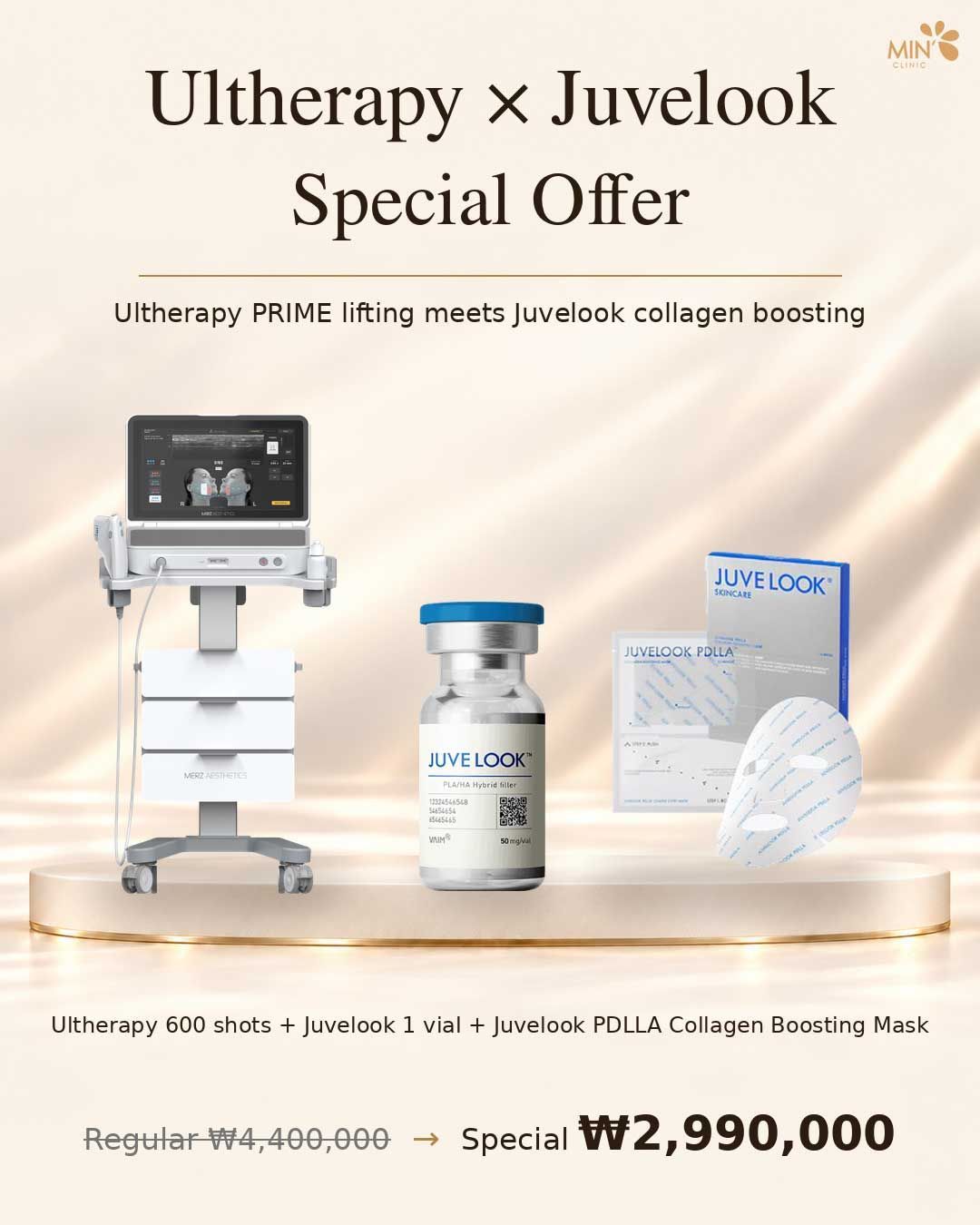
Suitable options: full-face Ultherapy or Ulthera Prime for structural lift, thread lifts for cheeks or jowls that need more immediate support, ONDA for a fuller lower face, and collagen stimulators or fillers where volume has been lost. Skin boosters remain useful for keeping the skin itself healthy.
Combination plans become more common in this decade because more than one layer is changing.
3. Your 50s and beyond: structure and volume
In the 50s, laxity is usually more advanced, skin becomes thinner and drier, and bone and fat volume loss continue. Hormonal changes can accelerate dryness and loss of firmness. A single treatment rarely addresses everything.
Common goals: lift, support and skin quality together.
Suitable options: combination plans — Ultherapy for the deep layer, threads for heavier tissue, 10THERMA for skin firmness, and boosters such as Juvelook or Rejuran to improve thinning skin. Fillers or collagen stimulators can restore lost structure.
Realistic expectations are important: non-surgical treatments give natural improvement, but significant excess skin may need a surgical consultation.
4. Why the same device is used differently
Ultherapy can be used in every decade, but the plan changes. In the 30s, fewer lines may be needed and the focus is often on one area. In the 40s and 50s, more areas and depths are usually treated. In slimmer or older faces, the doctor may protect areas where volume loss would make the face look hollow, sometimes favouring RF tightening instead.
5. Maintenance by decade
In your 30s, a yearly lifting or RF session plus periodic boosters can maintain results comfortably.
In your 40s, yearly lifting plus boosters, with threads or ONDA as needed, keeps definition steady.
In your 50s, yearly lifting combined with volume support and regular skin quality treatments helps maintain a natural, rested look.
6. Skin quality at every age
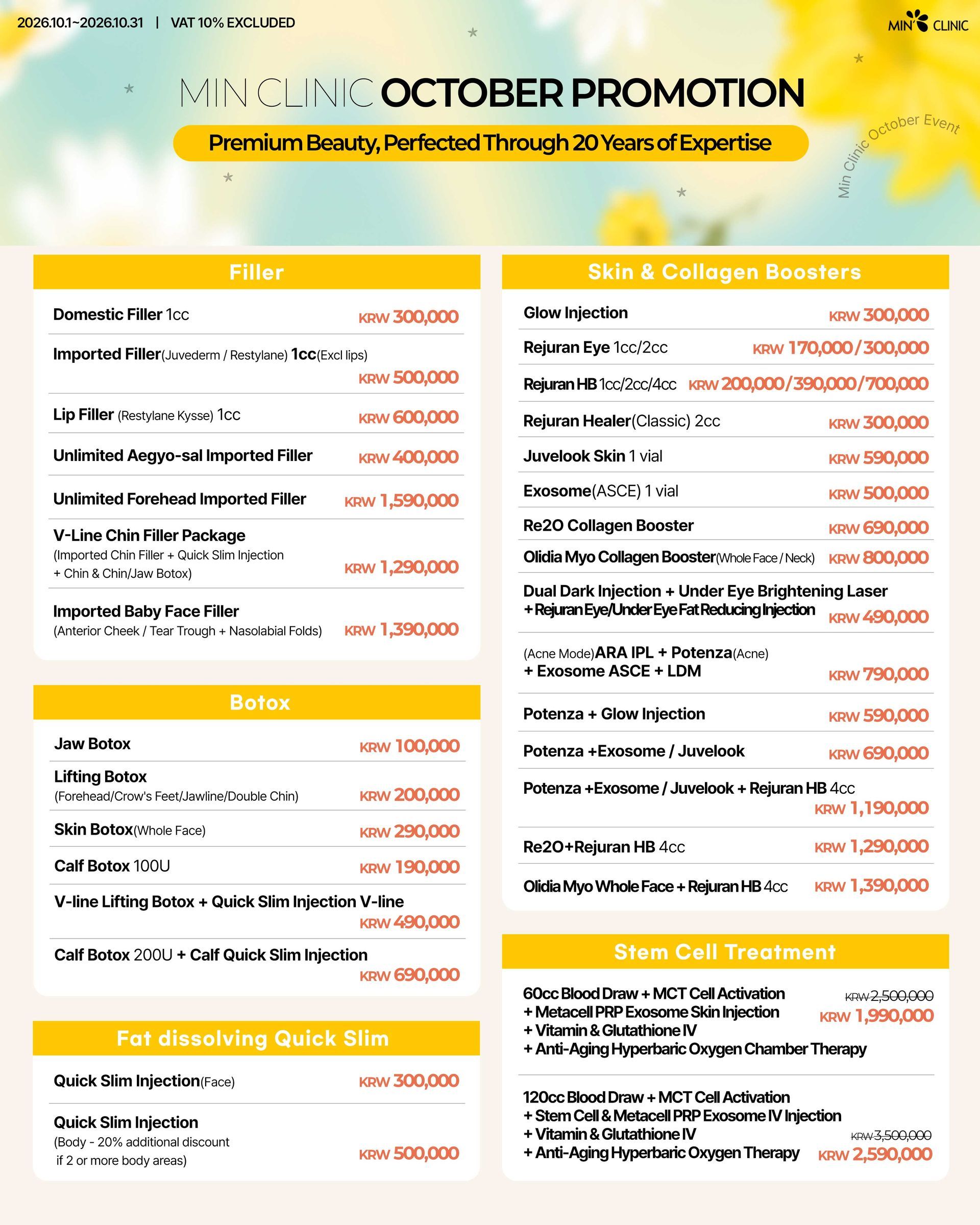
Lifting the face without improving the skin can leave a result that looks tight but tired. Skin boosters, gentle lasers and good daily skincare help the surface keep up with the structural improvement. Rejuran Healer typically costs KRW 300,000 to KRW 700,000 per session, and Juvelook KRW 500,000 to KRW 1,200,000.
7. Lifestyle factors that matter in every decade
Daily sunscreen is the single most effective anti-aging habit. Not smoking, sleeping well, staying hydrated and keeping a stable weight also make a measurable difference to how skin ages and how long treatments last.
8. Typical Seoul costs
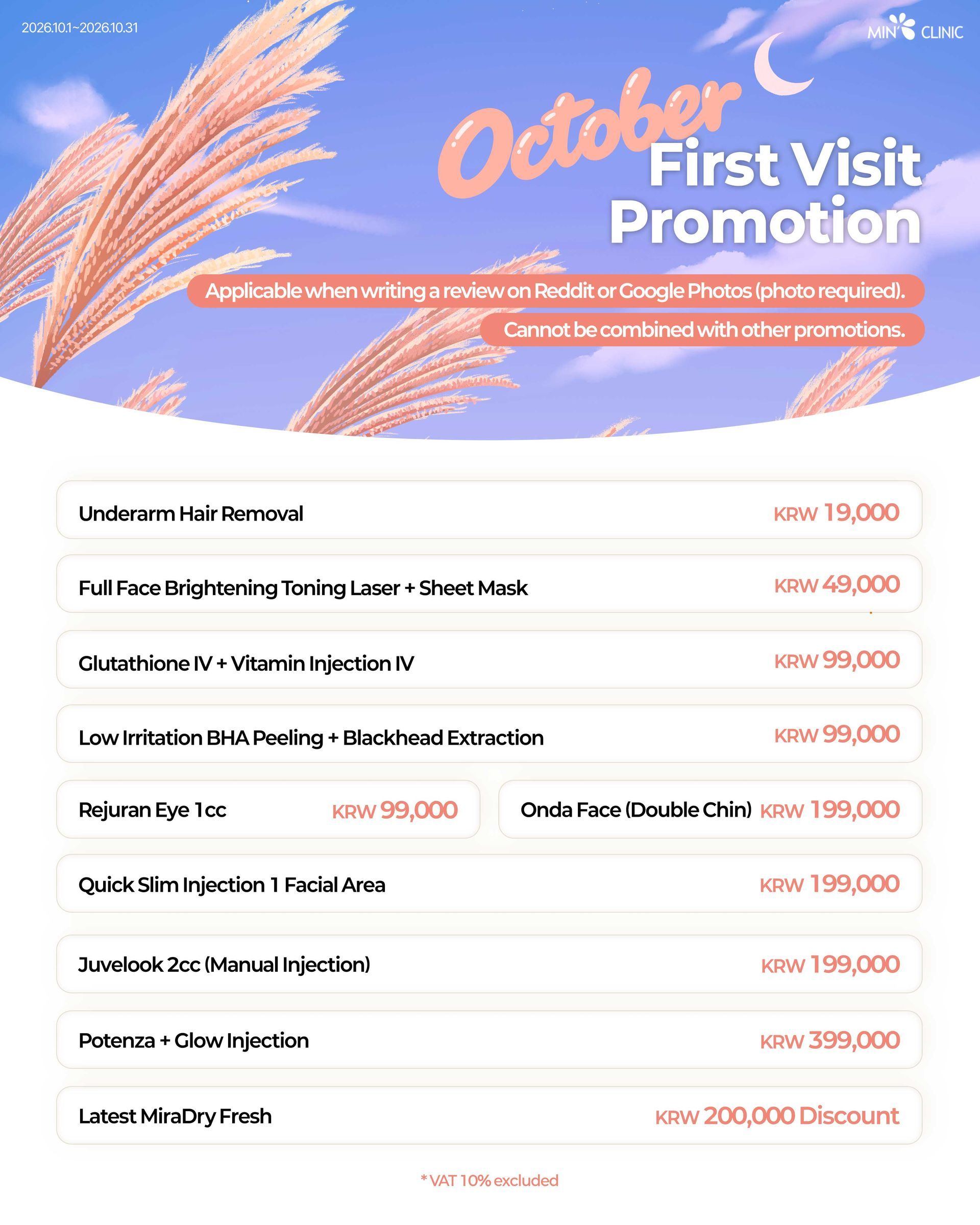
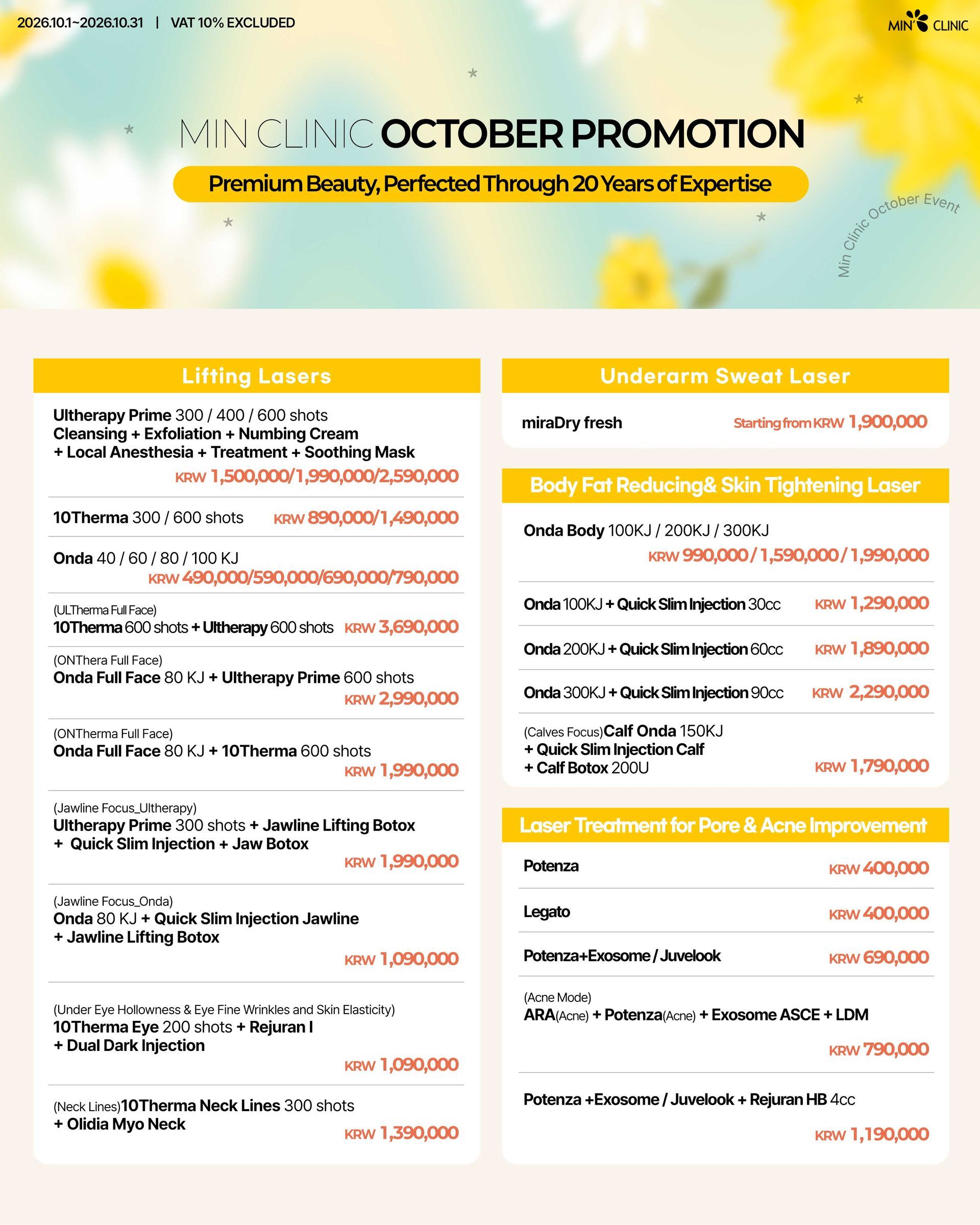
At MIN Clinic: Ultherapy around KRW 1,500,000 to KRW 3,500,000 per session, 10THERMA KRW 800,000 to KRW 2,500,000, ONDA KRW 500,000 to KRW 1,200,000, and a thread lift KRW 1,200,000 to KRW 3,000,000. See our event price list for current offers.
9. Age is a guide, not a rule
Some people in their 30s have more laxity than others in their 40s, and genetics, sun exposure and weight history all play a role. An AI 3D skin analysis helps the doctor plan treatment for your actual skin rather than your age alone.
Conclusion
In your 30s, focus on prevention and skin quality; in your 40s, restore definition and slow descent; in your 50s, combine lift, support and volume. At every age, sun protection and maintenance make the biggest long-term difference. Send your photos to our English-speaking team on WhatsApp, or explore our non-surgical facelift options.
This article is for general information and does not replace medical advice. Results vary by individual, and a doctor's consultation is required before any treatment.