
Thread Lift vs Ultherapy: Which Works Better for Sagging Cheeks?

Sagging cheeks can make the face look tired and deepen the lines that run from the nose to the corners of the mouth. Two of the most popular non-surgical solutions in Gangnam are a thread lift and Ultherapy. Both can lift the mid-face, but they work in completely different ways, so the better choice depends on how much sagging you have, how heavy your tissue is and how quickly you want to see a change.
This guide compares the two treatments side by side — how they work, speed of results, downtime, longevity and cost — and explains when combining them gives the best result.
1. Why cheeks sag
With age, the cheek fat pads gradually descend, the supportive SMAS layer loosens and collagen declines. Volume shifts downward, the upper cheek flattens and the nasolabial folds deepen. Some people also lose bone and fat volume in the mid-face, which makes sagging look more pronounced. In others, heavier cheeks simply have more weight pulling downward.
Understanding whether your concern is mainly laxity, heaviness or volume loss helps decide which treatment will make the biggest difference.
2. How a thread lift lifts the cheeks
Dissolvable threads with small cogs are placed under the skin through tiny entry points and used to reposition the cheek tissue upward. The lift is visible immediately. As the threads dissolve over the following months, they stimulate collagen that helps maintain firmness.
Treatment takes 30 to 60 minutes under local anaesthesia. Because threads physically move tissue, they are particularly effective for moderate sagging and heavier cheeks.
3. How Ultherapy lifts the cheeks
Ultherapy uses micro-focused ultrasound with real-time imaging to tighten the SMAS and deeper tissue. There are no needles or incisions; the lift develops gradually over two to three months as new collagen forms. It suits mild to moderate cheek laxity and gives a very natural change that friends notice as a fresher look rather than a procedure.
4. Speed of results
Thread lift: immediate lift, refined over one to two weeks as swelling settles.
Ultherapy: gradual lift, peaking at two to three months.
If you have an event soon or want to see a change before you fly home, threads offer a faster visible result. If you prefer gradual change that nobody can pinpoint, Ultherapy fits better.
5. Downtime
A thread lift usually involves about 24 to 48 hours of social downtime, with swelling, tightness and occasional small bruises. You may also feel tightness when chewing or smiling widely for a week or two. Ultherapy has minimal downtime — mild redness and occasional tenderness — so most patients continue their day normally.
6. Longevity
Thread lift results typically last around 12 to 18 months, depending on the thread type, with PCL threads usually lasting longest. Ultherapy results typically last about a year, or around 12 to 18 months with Ulthera Prime. Maintenance sessions keep either result steady.
7. Cost in Seoul
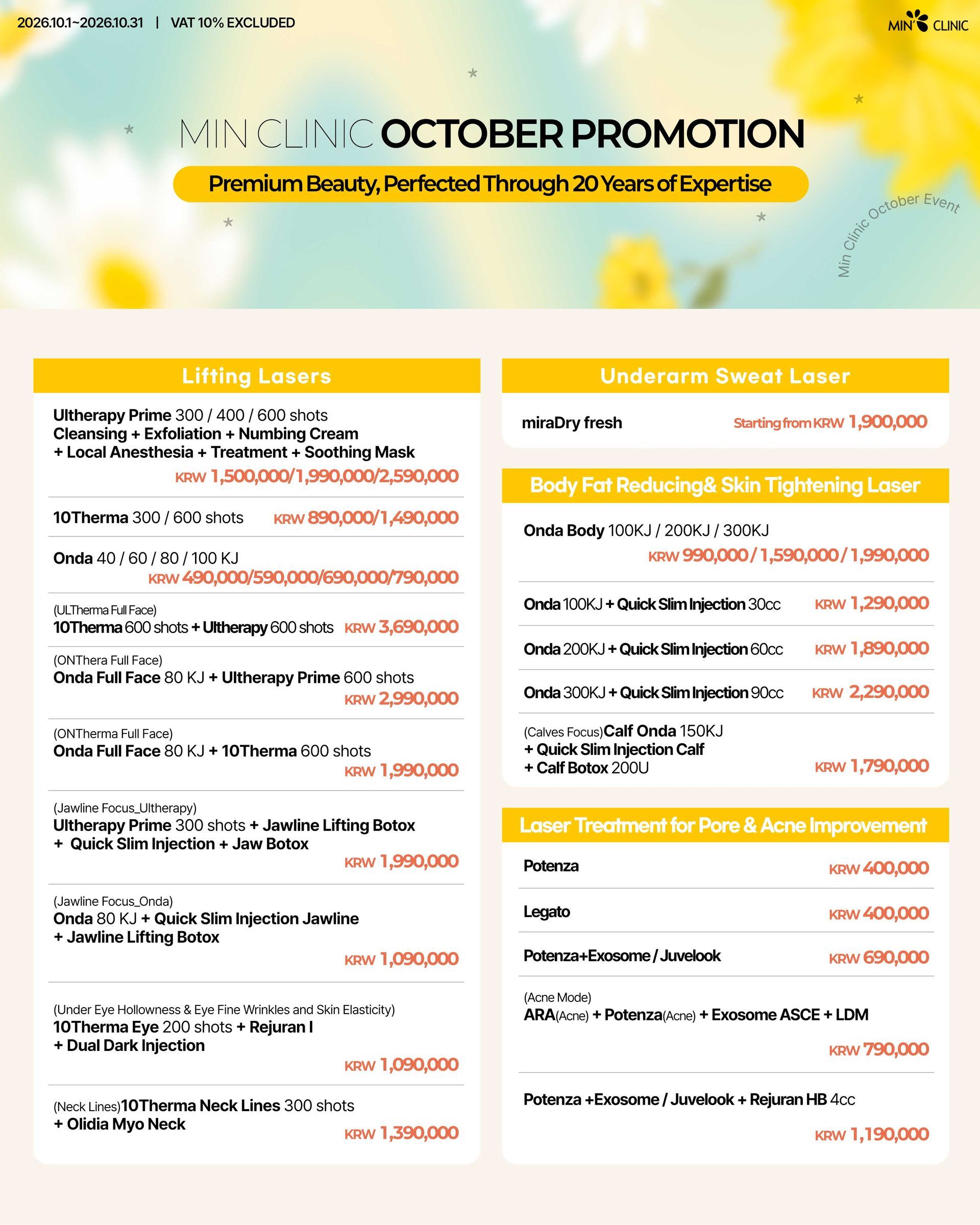
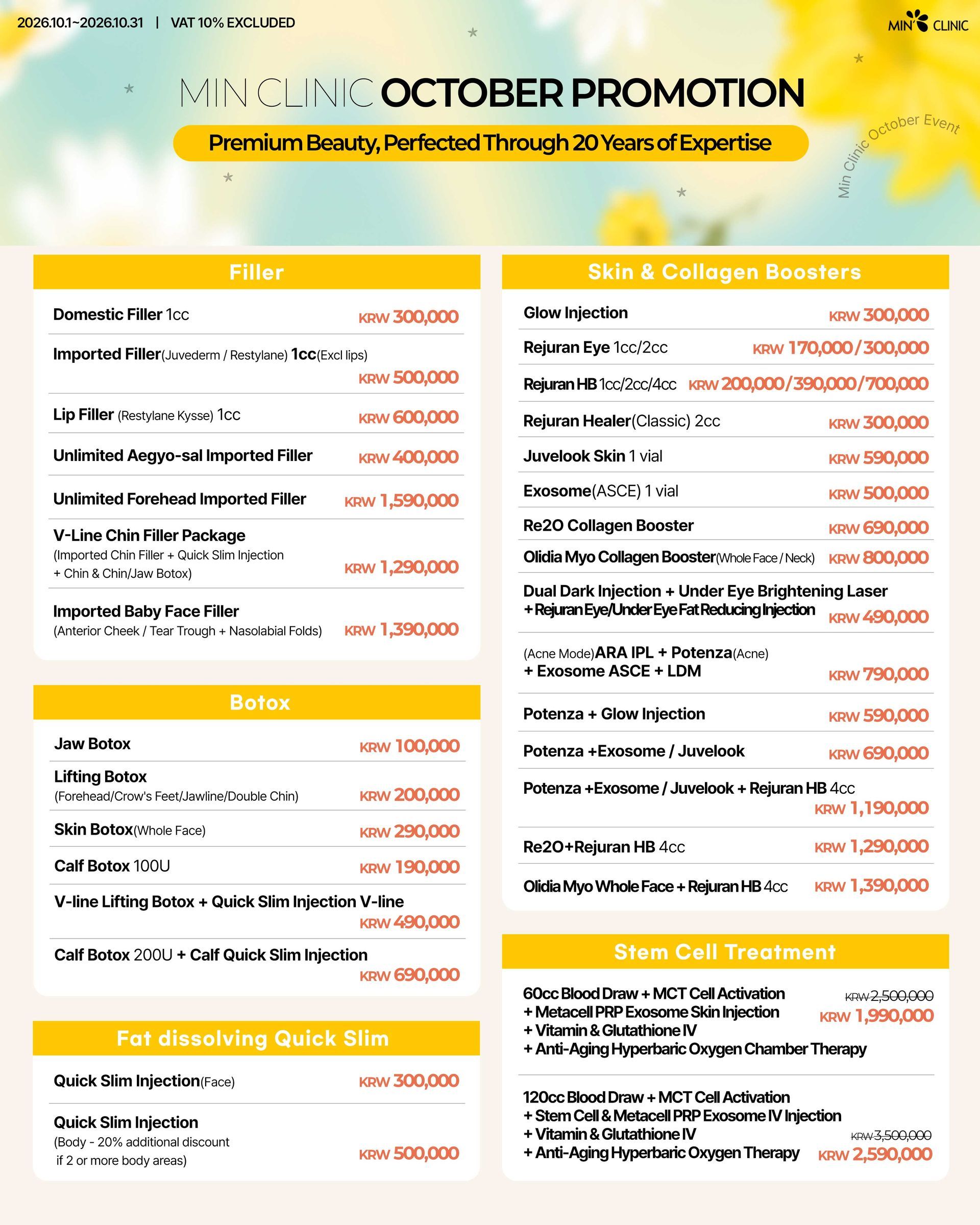
At MIN Clinic, a thread lift typically costs around KRW 1,200,000 to KRW 3,000,000, and Ultherapy around KRW 1,500,000 to KRW 3,500,000 per session, depending on areas, thread count or line count. See current offers on our event price list.
8. Which works better?
Choose a thread lift if cheek sagging is moderate, tissue is heavy, or you want an immediate result.
Choose Ultherapy if sagging is mild to moderate, you prefer no needles and minimal downtime, and you are happy to wait for gradual change.
Combine both when you want an immediate lift plus long-term tightening — a common approach for visible mid-face sagging.
9. When volume loss is part of the problem
If the cheeks look flat or hollow as well as low, lifting alone may not restore a youthful shape. Cheek filler or a collagen stimulator can rebuild volume, while threads or Ultherapy handle the lift. Adding volume to sagging tissue without lifting it first can make the face look heavy, so the order matters.
10. Safety considerations
Both treatments should be performed by an experienced doctor. With threads, careful placement reduces the risk of dimpling, asymmetry or visible thread ends. With Ultherapy, real-time imaging and appropriate energy settings protect against discomfort and volume loss. Ask how your doctor manages these risks during consultation.
11. Planning around your trip
If you choose threads, schedule them early in your stay so swelling settles before photos or your flight. Ultherapy can be done at almost any point, even the day before departure.
Conclusion
A thread lift repositions sagging cheeks instantly, while Ultherapy tightens the deeper layers gradually with almost no downtime. For many faces, especially when sagging is moderate, the best and longest-lasting result comes from combining them. Send your photos to our English-speaking team on WhatsApp, or compare our thread lift and Ultherapy pages.
This article is for general information and does not replace medical advice. Results vary by individual, and a doctor's consultation is required before any treatment.