
Ultherapy 300 vs 600 Shots: How Many Do You Really Need?

When you ask clinics in Seoul for an Ultherapy quote, packages are often described as 300 shots, 600 shots or more. It is natural to assume that more shots means a better result, and the price difference between packages can be significant. In reality, the right number depends on your face, how much laxity you have, and which areas actually need lifting.
This guide explains what a "shot" means, what a focused plan and a fuller plan can each achieve, how doctors decide on line counts, and how the number affects comfort, recovery and cost.
1. What does a "shot" or "line" mean?
In Ultherapy, a line is one pass of the transducer across the skin. Each pass places a row of tiny heat points at a fixed depth beneath the surface. Clinics often call these lines "shots". Every line contributes to the collagen response that tightens and lifts tissue over the following months, and the total count is simply how many lines are delivered across all treated areas and depths.
Different transducers reach different depths. Deeper transducers target the SMAS layer, the supportive structure tightened in a surgical facelift, while shallower ones treat the deeper dermis for skin firmness. A well-designed plan uses a combination of depths rather than simply adding more lines at one level.
2. Why line count is not the whole story
Two 300-line treatments can give very different results depending on where and how the lines are placed. Real-time imaging lets the doctor confirm the depth for each line and adapt to tissue thickness, which changes from the forehead to the cheeks to the jawline. Placement, depth selection and energy settings matter as much as the total number.
That is why a package number alone is a poor way to compare clinics. Ask how the lines will be distributed across your face and which depths will be used.
3. What around 300 lines can do
A plan of about 300 lines is usually focused. It might target one or two areas — for example the lower face and jawline, or the brow and upper face — in someone with mild laxity. For a first treatment in your early to mid-30s, a focused plan can give a subtle, natural lift and firmer skin without over-treating.
Focused plans also suit people who want to address one specific concern, such as a softening jawline before an event, or who are combining Ultherapy with other treatments that address the rest of the face.
4. What around 600 lines can do
About 600 lines usually allows a fuller face plan covering the brow, cheeks, jawline and sometimes the area under the chin. People with more noticeable laxity, larger faces or thicker skin may benefit from this level of coverage, because each region receives enough energy at more than one depth.
Treating the neck typically requires additional lines on top of a full-face plan. If neck laxity or horizontal neck lines are a concern, mention it during consultation so the plan includes it from the start.
5. How a doctor decides your line count
The right count comes from an assessment, not a menu. At MIN Clinic, the doctor considers several factors:
Skin thickness and fat distribution — thinner faces may need fewer deep lines and very careful placement, while heavier lower faces may need more.
The degree of laxity in each area — the jawline may need more attention than the brow, or the other way around.
Your goals — a refresh before an event is different from a structural lift for early jowls.
Your history — previous lifting, threads or fillers can change where energy should go.
An AI 3D skin analysis and an in-person examination help the doctor build a plan, and the imaging during treatment allows lines to be added or reduced where the tissue requires it.
6. Is more always better?
Not necessarily. Too few lines can leave results underwhelming, especially for heavier tissue. But excessive energy on a thin face can make some areas look slightly hollow, particularly at the temples or beneath the cheekbones. A balanced plan places enough energy where lift is needed and protects areas where volume matters for a youthful look.
If your face is slim, your doctor may suggest fewer deep lines combined with a treatment such as 10THERMA for skin tightening, rather than simply increasing the Ultherapy count.
7. How line count affects cost
Price in Seoul is closely linked to the number of lines and areas. Ultherapy typically costs around KRW 1,500,000 to KRW 3,500,000 per session, with focused plans at the lower end and full face and neck plans at the higher end. When comparing quotes, confirm that each is for genuine Ultherapy or Ulthera Prime, check the exact number of lines, and ask whether a doctor performs the treatment.
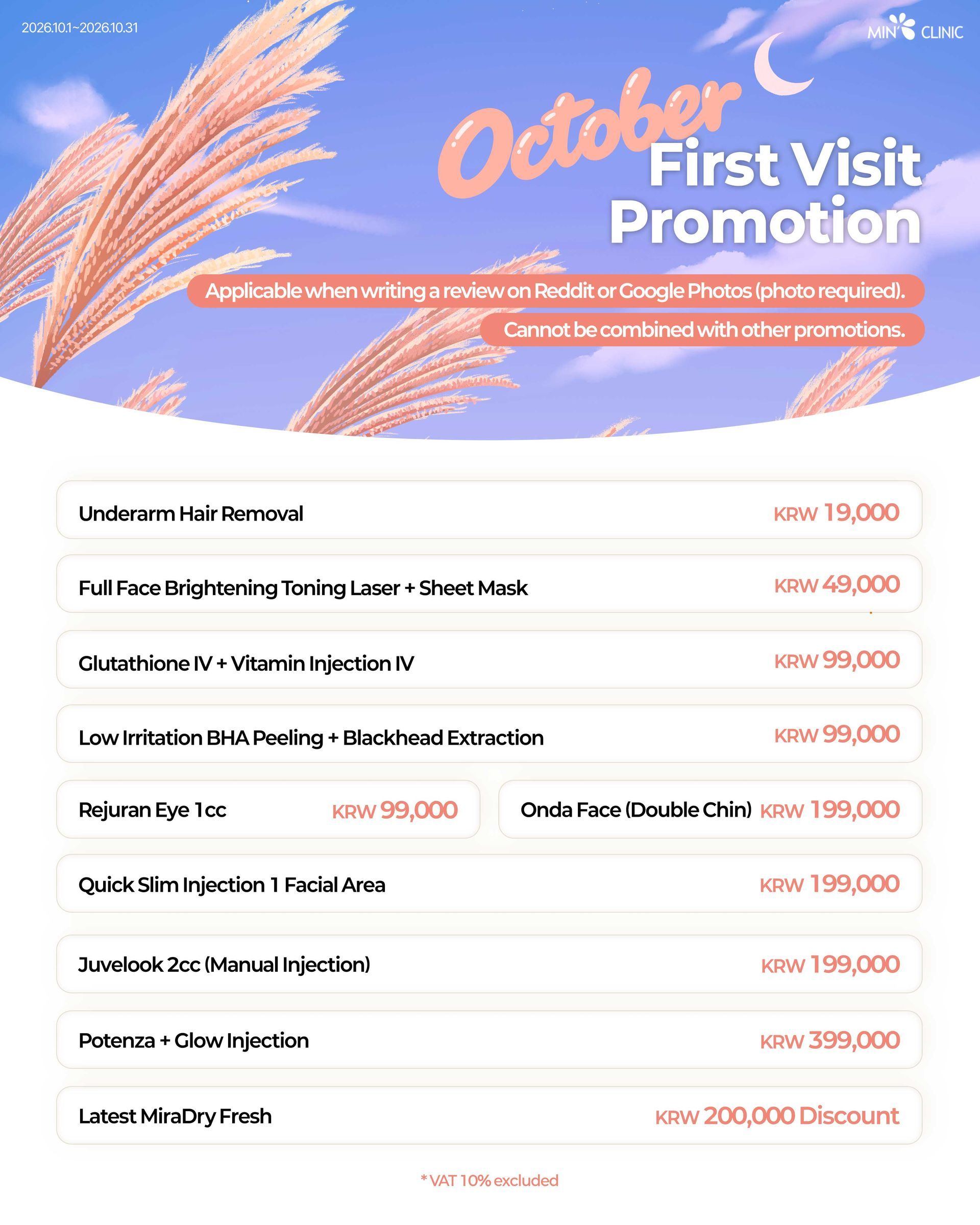
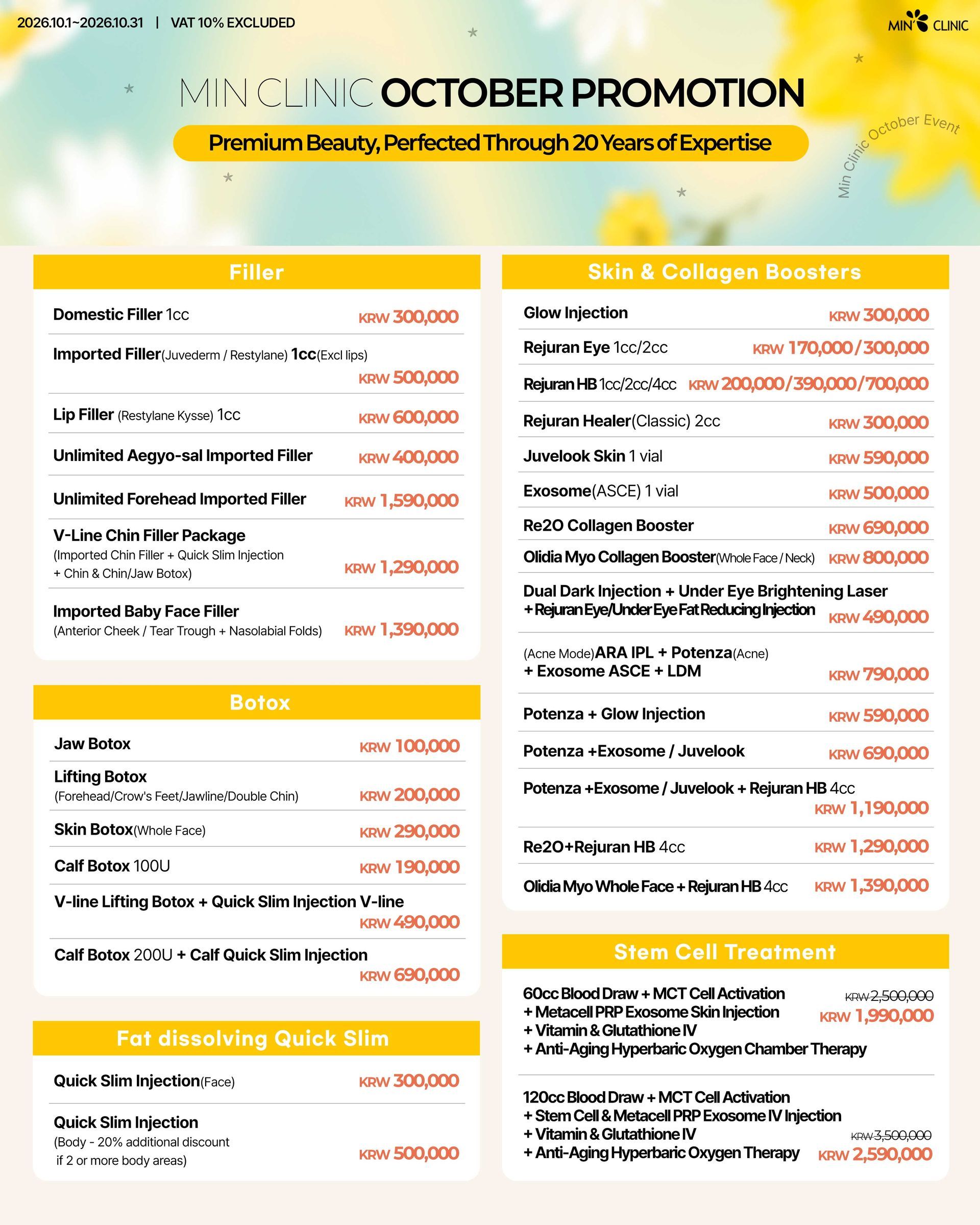
Current offers are on our event price list. Foreign passport holders may also be eligible for tax-free benefits.
8. Comfort and recovery with higher line counts
More lines mean a longer session and more total energy, so you may feel more warmth and tenderness, especially along the jawline and over bone. Numbing cream is applied beforehand and energy can be adjusted during treatment. Downtime remains minimal: mild redness for a few hours and occasional swelling or tenderness for a few days. Most people return to normal activities the same day.
9. Maintaining your result
Results usually peak at two to three months and last about a year with original Ultherapy, or around 12 to 18 months with Ulthera Prime. Many patients find that a well-planned yearly session — sometimes with a slightly lower line count than the first — keeps results steady rather than waiting for a larger correction later.
Conclusion
There is no universal right number of Ultherapy shots. A focused plan of around 300 lines suits mild laxity in one or two areas, while around 600 lines suits a fuller face plan or more noticeable sagging. The best plan is built around your anatomy, with energy placed precisely using real-time imaging. Send your photos to our English-speaking team on WhatsApp for a suggested plan, or read more on our Ultherapy in Gangnam page.
This article is for general information and does not replace medical advice. Results vary by individual, and a doctor's consultation is required before any treatment.