
Korean Skincare Clinic Prices Explained

Eugene Lee • November 10, 2025

Why Price Transparency Matters

South Korea is globally known for cutting-edge skincare technology and aesthetic dermatology. But with many clinics, devices, packages and foreign-patient pricing variations, the cost landscape can be confusing. Whether you’re based in Seoul or visiting as a tourist, knowing typical price ranges and what drives cost helps you make informed choices and avoid surprises.

📋 Typical Price Ranges in 2025

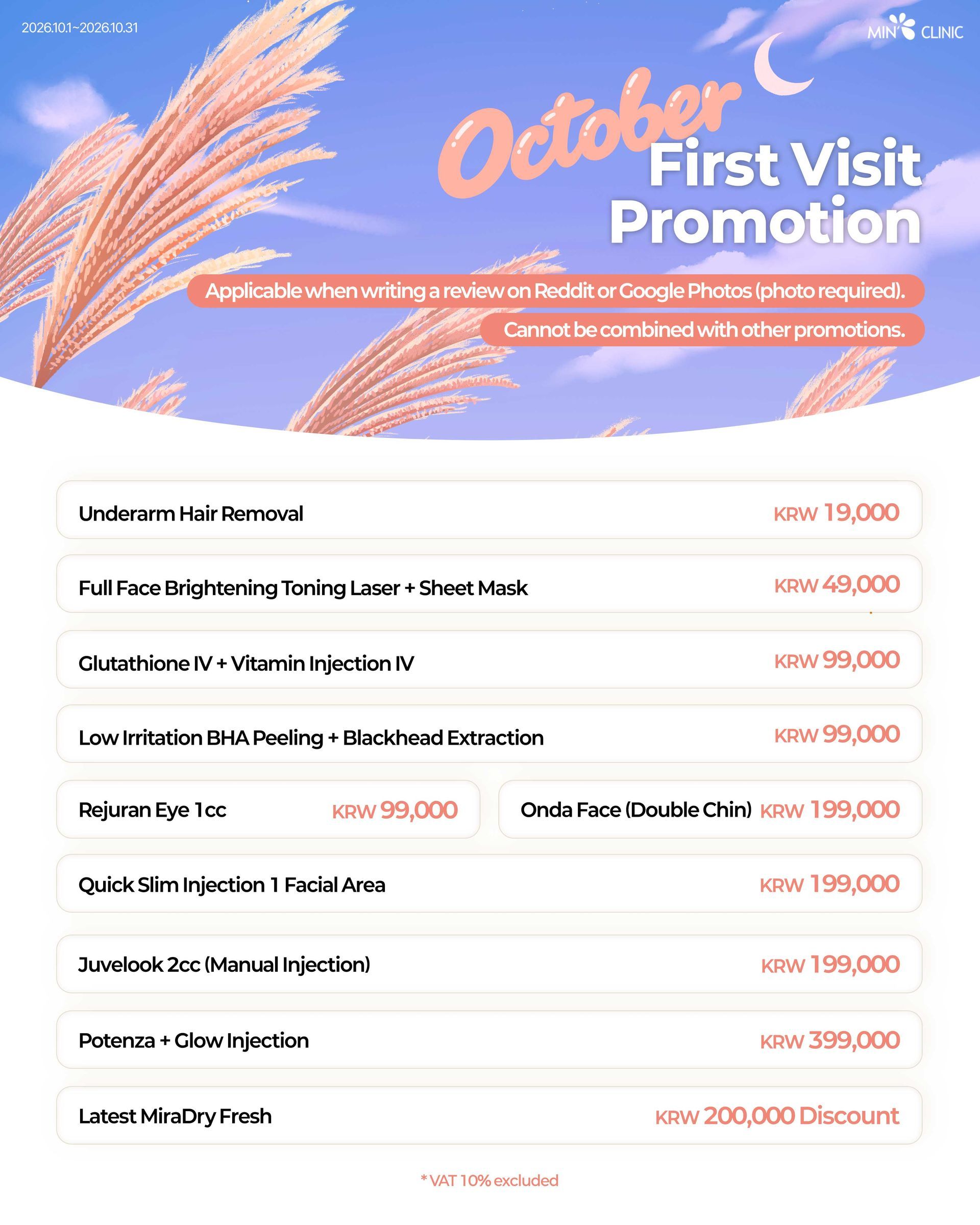
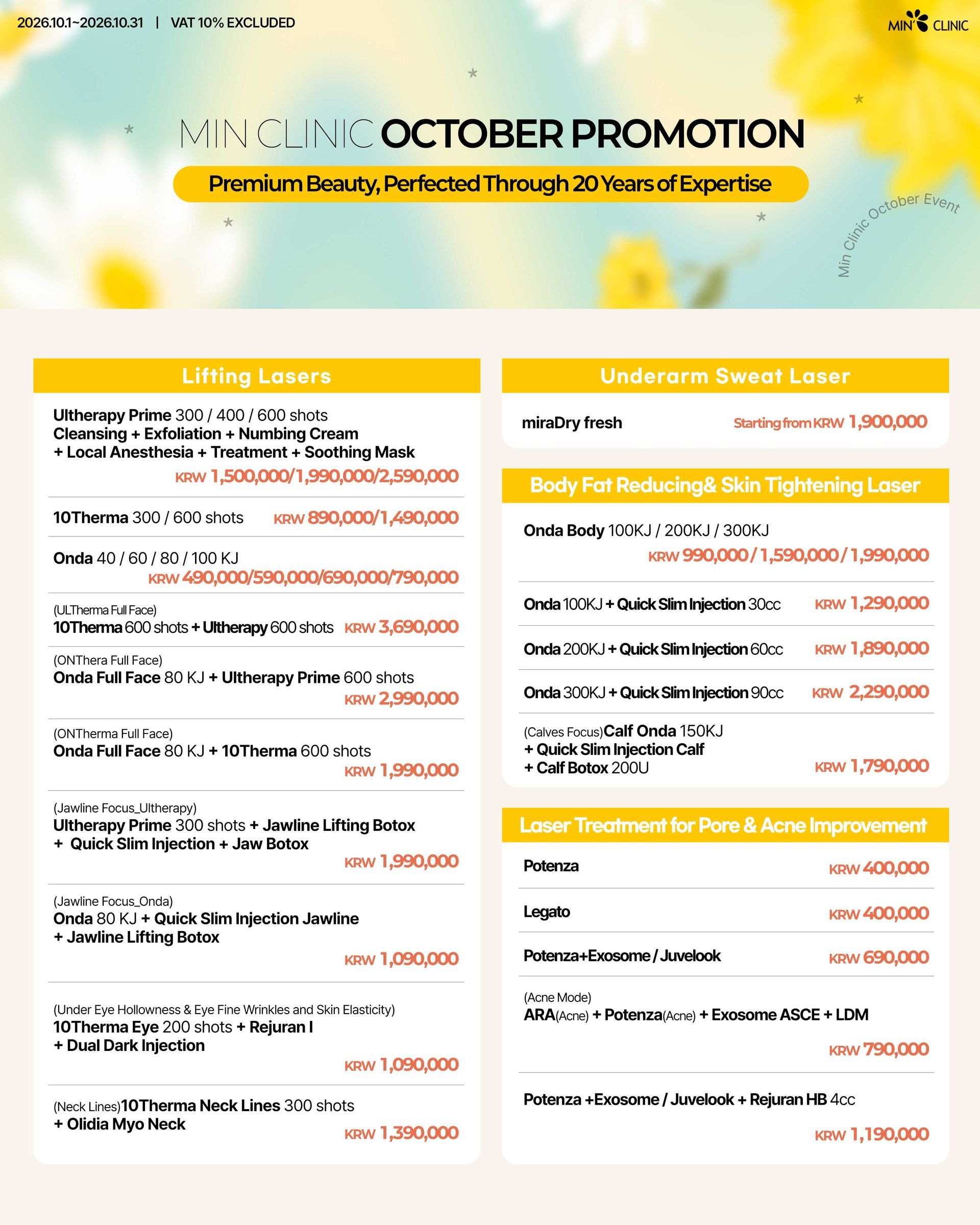
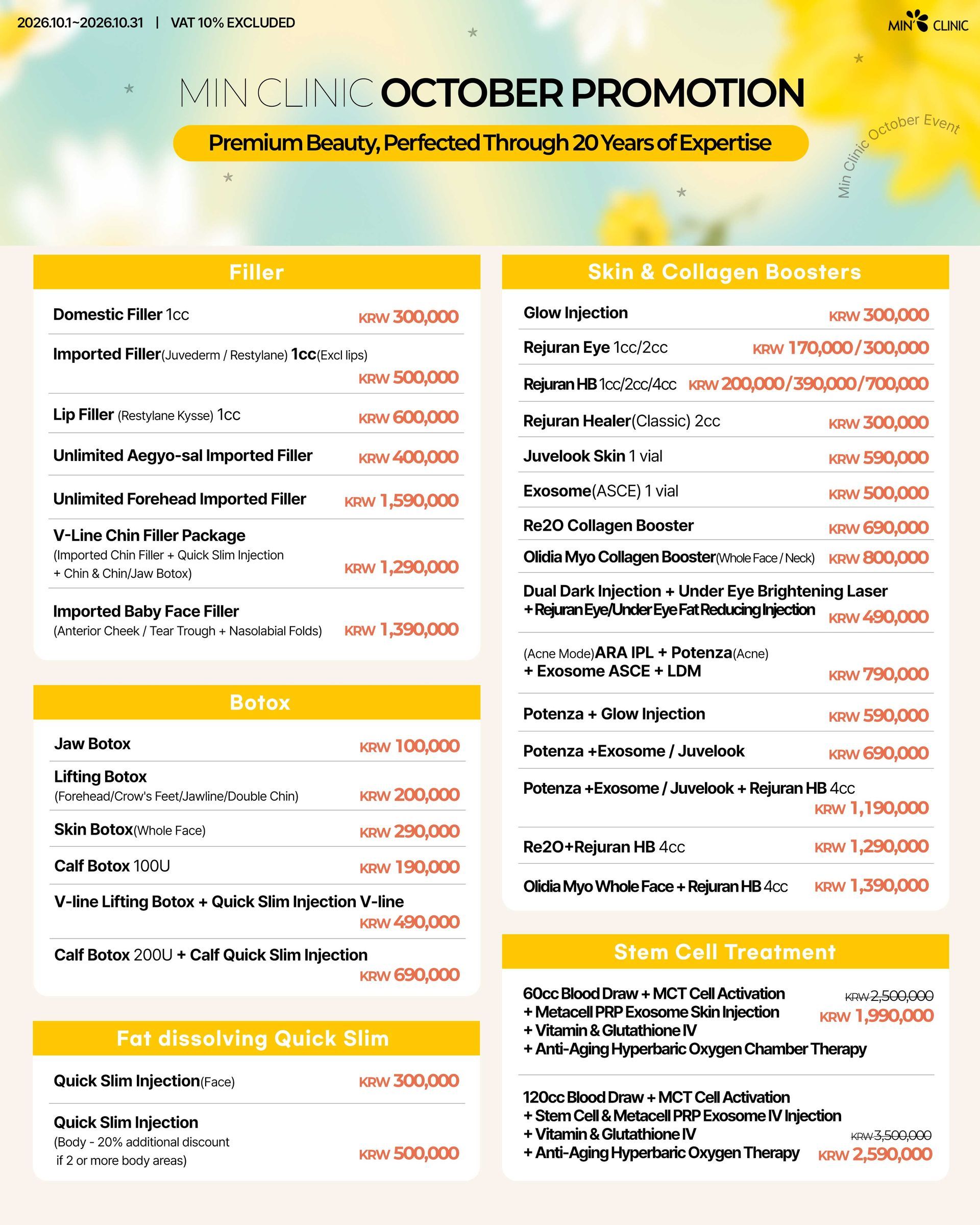
Here are current pricing benchmarks for popular treatments in Korean skin clinics, especially in Seoul’s Gangnam/Myeongdong area:

  • Initial Consultation: ≈ ₩10,000 – ₩40,000 (KRW) for a basic doctor/skin-doctor consult.
  • Laser Toning / Pigmentation Session: ≈ ₩80,000 – ₩250,000 per session for pigmented/toning lasers. seoulprescriptionglasses.com+1
  • Fractional Acne-Scar Laser: ≈ ₩200,000 – ₩600,000 per session for more intensive resurfacing.
  • Skin Booster (HA, PN etc.): ≈ ₩180,000 – ₩450,000 per area/session depending on brand & area.
  • High-End Lifting or Ultrasound/Device Treatment (eg. full-face Ultherapy): can run from ≈ ₩1,100,000 upward depending on area.

🔍 What Factors Influence Price Variation

Understanding why one clinic quote may be twice-the price of another is key. Here are the main cost drivers:

  • Device brand & model: Premium laser machines or latest-generation devices cost more to run.
  • Clinic reputation & location: High-end clinics in Gangnam/Cheongdam command higher prices than smaller neighbourhood clinics.
  • Scope of treatment: Full face, large area, multiple passes or added booster components cost more.
  • Number of sessions and package vs single session: Many treatments require multiple visits; single session cost may be higher per visit than a multi-session package.
  • Materials/consumables and after-care: Some quotes include numbing, follow-up checks, post-care products; others don’t.
  • Foreign-patient pricing & translation/coordination services: Clinics catering to international patients may include extra support, which can affect cost.
  • Skin type / risk profile: If you have sensitive skin, darker skin tone, or more complex concerns (deep scars, melasma) the clinic may recommend more sessions or gentler protocols—raising cost.

📌 How to Read a Quote & What to Ask

When you receive a quote from a Korean skin clinic, ask the following to compare fairly:

  • What exactly is included? (consultation, numbing, follow-up)
  • Device name/model and area treated (eg. full face vs half face)
  • Number of sessions recommended and cost per session vs package.
  • What are the optional add-ons and are they necessary?
  • Are there any foreign-patient surcharges or language/translator fees?
  • What downtime should I expect, and does the price reflect this?
  • Is the doctor (or “skin doctor”) performing or supervising?
  • What is the refund or revision policy if results aren’t as expected?

✨ Value-Focused Tips for Foreign Patients

  • Consider introductory sessions or “trial” offers to test clinic quality before committing to large packages.
  • Ask for package pricing if you’ll do multiple sessions — it often reduces cost per visit.
  • Choose clinics that show foreign-price transparency (English website, quoted in USD or KRW).
  • Book treatments with minimal downtime if you’re travelling (e.g., laser toning rather than full resurfacing).
  • Use off-peak times if available — some clinics run promotions during slower hours or seasons.
  • Confirm whether you’ll receive a detailed invoice/receipt (important for reimbursements or tax-free eligibility).

🎯 Final Thoughts

In 2025, skin treatments in Korea offer a wide range of pricing — from affordable consultation and toning sessions to premium multi-machine, multi-session packages. The key to getting good value is understanding what’s included, comparing like-for-like quotes, recognizing what drives cost, and asking the right questions upfront.

Whether it’s an acne-scar laser, skin booster or simple tone-up session, being clear about device, scope, sessions and after-care means you’ll be better positioned to pick a clinic that fits your budget and expectations.

December 6, 2025
Dealing with a botched thread lift? Learn how Korea corrects thread lift complications like asymmetry, dimpling, lumps, pain, and visible threads using safe, advanced revision techniques.
December 6, 2025
Explore the different thread lift types in Korea—PDO, PLLA, PCL, cog threads, mono threads, and advanced Korean vector-lifting techniques. Learn which thread type suits your face and goals.
December 6, 2025
Planning a thread lift in Korea? Discover the typical cost ranges, what impacts the price (thread type, number, clinic, surgeon, area), and tips for budgeting smart for your Korean non-surgical lift.
December 6, 2025
Considering a thread lift or facelift in Korea? Explore the differences in procedures, results, downtime, cost, duration, and which treatment suits your sagging level and goals.
December 6, 2025
Deciding between a mini facelift or full facelift in Korea? Learn the differences in results, incision type, longevity, downtime, cost, and which lift is best for mild, moderate, or severe sagging.
December 6, 2025
Wondering how many threads you need and how much a thread lift costs in Korea? Learn how Korean dermatologists estimate thread count based on face shape, sagging level, and lifting goals.
December 6, 2025
A complete guide to Deep-Plane Facelift vs SMAS Lift in Korea. Learn the differences, benefits, longevity, ideal candidates, recovery time, and how to choose the right anti-aging lift for your face type. Clear, easy-to-read, foreigner-friendly information.
By Eugene Lee December 6, 2025
Deep-Plane Facelift vs SMAS Lift in Korea: Full Guide A facelift in Korea can dramatically rejuvenate the lower face and midface, but the right technique matters. The two most popular surgical options—SMAS Lift and Deep-Plane Facelift—offer different levels of lifting, longevity, and recovery. Here is a clean, easy-to-read breakdown for patients comparing both. What Is a SMAS Lift? A SMAS Lift works on the Superficial Musculoaponeurotic System, the fibrous-muscular layer just beneath the skin. Tightens sagging skin and soft tissue Focuses on jawline, jowls, and lower face Natural improvement without over-pulling Ideal for moderate aging Slightly faster recovery compared to deeper lifts This is a widely used technique in Korea for patients who want significant rejuvenation without modifying deeper structures. What Is a Deep-Plane Facelift? A Deep-Plane Facelift goes beneath the SMAS layer, releasing deeper facial ligaments and lifting the skin, fat, and muscle together as a single unit. Corrects deeper sagging Improves midface descent and nasolabial folds Ideal for heavier or thicker facial tissues Produces the most natural and long-lasting lift More complex and requires advanced surgical skill This technique is popular in Korea for patients seeking a more dramatic, youthful transformation. Key Differences Between SMAS and Deep-Plane Depth of Surgery SMAS Lift works closer to the surface, tightening the SMAS layer. Deep-Plane goes under the SMAS, releasing ligaments and repositioning deeper tissues. Results SMAS Lift offers a smooth, refreshed jawline and improved lower face. Deep-Plane restores midface volume, smooths folds, lifts the lower face, and provides stronger rejuvenation. Natural Appearance Both techniques can look natural when done well. Deep-plane tends to age more gracefully because the deeper structures are repositioned, not pulled. Recovery Time SMAS may have a slightly quicker recovery. Deep-plane may involve more swelling early on due to deeper work. Surgical Complexity Deep-plane requires a higher level of skill and experience, as it involves delicate anatomical structures. Who Is SMAS Lift Best For? Choose a SMAS Lift if you have: Mild to moderate sagging Early jowling Lower face concerns without heavy midface descent Thinner skin or lighter facial tissue A preference for shorter downtime Desired natural improvement without a dramatic change This is common for patients in their 40s to early 50s. Who Is a Deep-Plane Facelift Best For? Choose a Deep-Plane Facelift if you have: Moderate to severe sagging Heavy or rounder cheeks Deep nasolabial folds Midface flattening or descent Thicker facial soft tissue (common in some Asian facial structures) Desire for the longest-lasting and most comprehensive lift This is typically ideal for people in their 50s to 70s. Longevity of Results SMAS Lift Generally lasts 7–10 years, depending on age, lifestyle, and skin quality. Deep-Plane Facelift Often lasts 10–15 years or longer, with smoother aging because deeper tissues are repositioned. Recovery Timeline SMAS Lift Recovery Bruising/swelling: 1–2 weeks Return to work: 1–2 weeks Final contour: 2–3 months Deep-Plane Recovery Swelling may be more noticeable early Return to work: 2–3 weeks Final refinement: 3–6 months Cost Guide in Korea Actual pricing varies by clinic and surgeon, but general trends are: SMAS Lift: mid-range facelift cost Deep-Plane Facelift: higher cost due to deeper dissection and surgeon expertise How to Choose the Right Lift in Korea Ask yourself the following: Do I want subtle or dramatic improvement? Is my concern mainly lower face or also midface/cheeks? How much downtime can I commit to? Do I have thicker facial tissue that needs deeper release? How long do I want the results to last? A detailed consultation with a Korean facelift specialist can determine the best option based on anatomical factors such as skin thickness, fat distribution, and facial laxity. Questions to Ask During Consultation Which technique suits my skin type and face shape? Do I need midface repositioning or only jawline lifting? What is the expected scar location and healing timeline? Do I need a neck lift or fat grafting together? How many SMAS or deep-plane facelifts have you performed? Final Takeaway Both procedures are exceptional when performed by an experienced surgeon in Korea: SMAS Lift = natural results, moderate aging, faster recovery Deep-Plane Facelift = deepest correction, powerful lifting, longest-lasting results The right choice depends on your aging pattern, facial structure, and goals. A proper in-person evaluation is essential for choosing the safest and most effective technique.
December 6, 2025
Compare thread lift and filler lift techniques as Korean surgeons use them. Learn which treatment is stronger for sagging, which is better for volume loss, and when combining both delivers the best facial lifting results.
December 6, 2025
Compare Pico laser and chemical peels for hyperpigmentation. Learn which treatment works best for deep pigment, surface discoloration, acne marks, and melasma.